


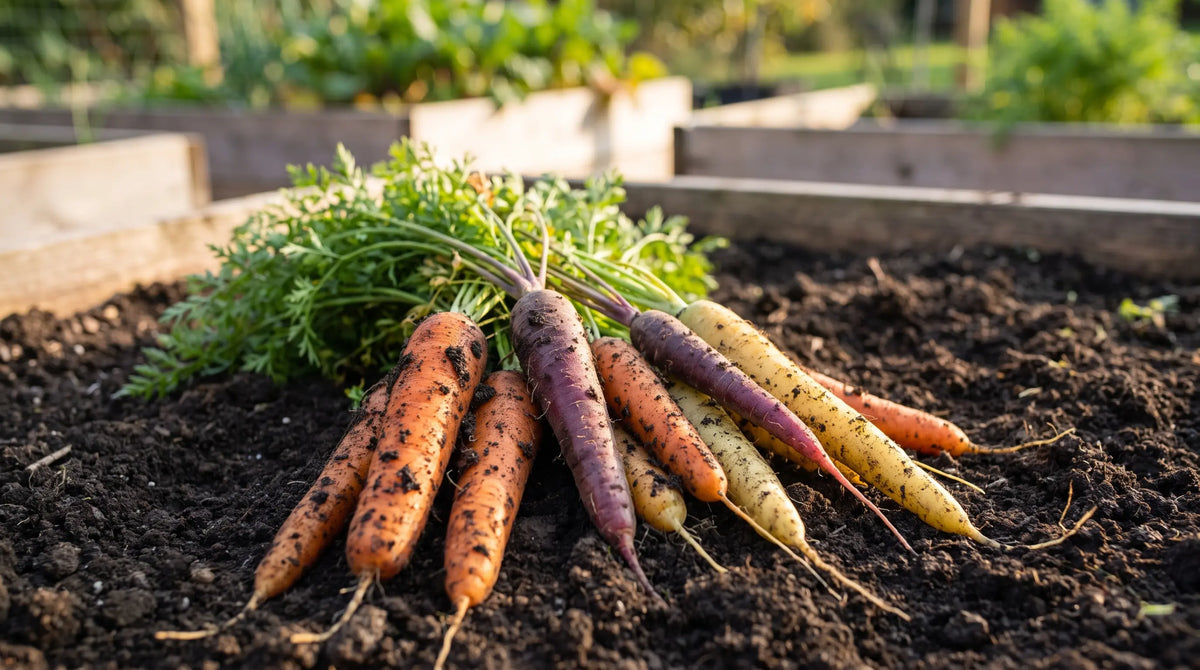
When to Harvest Carrots: How to Know They're Sweet & Ready
Updated September 2026
You planted those tiny seeds back in spring, watched the feathery tops fill in, and now you are standing over the bed wondering if there is anything worth pulling underneath. Carrots keep their secret well. The part you eat grows out of sight, so knowing the right moment to harvest comes down to reading a few reliable clues instead of guessing and yanking.
The good news is that carrots are forgiving. Pull one too early and you get a sweet little snack. Leave one a bit too long in cool weather and it is usually still fine. Where people go wrong is treating the days-to-maturity number as a deadline instead of a starting gun. Once you learn to read the shoulder at the soil line, you will trust your eye every time and stop sacrificing good carrots to blind test pulls.
How long do carrots take to grow?
Most carrots are ready 60 to 80 days after the seeds germinate, though that window shifts with the type you are growing. Small, quick varieties finish on the early end, while long storage carrots take their time. One thing worth knowing up front: carrots are famously slow and uneven to sprout, often taking two to three weeks, so start counting maturity from the day you see green, not the day you sowed.

Soil temperature, steady moisture, and how thickly you sowed all nudge the timing too. Crowded rows are the single most common reason a bed underperforms. Carrots that never got thinned to about an inch or two apart will stall as thin, tangled roots no matter how long you wait, which is exactly why a calendar alone will not tell you the whole story. Use the packet number as a starting point, then begin checking about a week or two before that date. Carrots do not all finish at once, so a single bed keeps giving you harvests over several weeks.
Sale

Rainbow Carrot Seeds – Variety Pack, Non-GMO HeirloomNon-GMO HeirloomA colorful mix that lets you stagger your harvest and pull carrots as each shoulder fills in.
Price$14.99
Sale Price$13.49
Sale

Imperator 58 Carrot Seeds – Non-GMO HeirloomNon-GMO HeirloomThe classic long carrot for deep, loose, stone-free beds and a satisfying full-season harvest.
Price$5.99
Sale Price$4.99
The signs your carrots are ready
The clearest tell is the shoulder, the top of the root right where it meets the greens. Brush a little soil aside and look. If you see a rounded, filled-out crown roughly the width of your thumb, somewhere between half an inch and one inch across for most types, there is a good carrot waiting below. Thin, pencil-width shoulders mean give it more time. The reason this works is simple: the carrot widens at the top first and tapers down, so a full shoulder almost always means a full root.
Watch for green shoulders too. When the crown pushes above the soil and catches sun, it turns green and slightly bitter. It is still perfectly good, just trim that top inch. To prevent it, hill a little loose soil over exposed shoulders as the roots swell. When you find a promising shoulder, pull one as a test. That first carrot tells you far more than staring at the tops ever will, and it costs you nothing to eat the evidence.
Does size always mean ready?
Not exactly. Bigger is not automatically better with carrots. Once a root grows well past its ideal size it can turn woody and split, and the core loses that clean snap, especially with the longer types. Sweetness and texture peak right around the mature size for each variety, so a perfectly sized carrot beats a giant one nearly every time. If your carrots are all top and no root, the usual culprit is either overcrowding or too much nitrogen, which pushes lush greens at the expense of the part you actually want.
If you are growing a short, stout type like Chantenay in heavy or rocky ground, size matters even less. These are bred to bulk up fast without needing deep, loose soil, so you can start pulling as soon as the shoulders look full.
Sale

Chantenay Carrot Seeds – Royal, Non-GMO HeirloomNon-GMO HeirloomShort and stout, so it bulks up fast even in heavy or rocky soil.
Price$5.99
Sale Price$4.99
Why cold weather makes carrots sweeter
Here is the trick every carrot grower loves. When temperatures drop in fall, carrots convert some of their stored starch into sugars, which act as a natural antifreeze in the root cells. That means carrots harvested after a couple of light frosts taste noticeably sweeter than the same carrots pulled in warm weather. A few cold nights are a gift, not a threat, and it is the main reason experienced growers time a big planting specifically for a fall harvest.
You can leave carrots in the ground well into fall and pull them as you need them, since the cool soil holds them better than most refrigerators. Once hard freezes settle in, lay down a thick blanket of straw or shredded leaves, six inches or more, over the bed before the ground locks up solid. That insulation keeps the soil workable underneath, so you can keep harvesting sweet carrots long after the rest of the garden has quit. Just mark the row, because those buried tops disappear fast under snow.
How to pull carrots without snapping them
Grabbing the greens and hauling straight up is how you end up holding a fistful of leaves and a carrot still in the ground. The roots grip hard, and the tops tear away before the taproot lets go. Instead, loosen the soil first. Slide a garden fork or trowel in a few inches away from the row, angled so you do not stab through the roots, and gently lever upward to break the soil's grip while you ease the carrot out by the base of the greens.
If your ground is dry and packed, water the bed an hour or so before harvest. Damp soil releases the roots much more willingly than bone-dry ground. Twist gently as you lift and the carrot usually slides free clean and whole. One more pro habit: twist or snip the tops off within an hour of pulling any carrots you plan to store, because those leaves keep pulling moisture out of the root and will leave you with limp carrots by the next day.
Matching the variety to your harvest plan
What you grow shapes when and how you harvest. Quick, tender types are ready sooner and forgive shallow beds and containers. Long Imperator carrots need deep, loose, stone-free soil and a longer season, and they will fork or stunt in compacted ground. Stubby Chantenay roots shrug off tough soil. Growing a mix means you are never waiting on a single harvest date, and it spreads the work out instead of dumping the whole bed on you in one weekend.
| Type | Days to maturity | Best for |
|---|---|---|
| Little Finger | 55 to 65 days | Containers, early snacking |
| Rainbow mix | 60 to 75 days | Color, staggered picking |
| Chantenay | 65 to 75 days | Heavy or rocky soil |
| Imperator 58 | 70 to 80 days | Deep soil, classic length |
If you want the earliest possible harvest, start with a fast, finger-sized carrot and pull them young and tender. For a steady supply instead of one big rush, sow a fresh short row every two to three weeks rather than planting everything at once.
However you plant, remember the goal is that sweet, crisp snap you only get from a carrot pulled at the right moment. Read the shoulders, let the cold do its work, and lift with a little patience.
Frequently asked questions
When are carrots ready to pick?
Carrots are usually ready 60 to 80 days after sprouting, depending on the variety. The best sign is the shoulder at the soil line looking rounded and roughly half an inch to one inch across. Brush the soil back, and if the crown looks full, pull a test carrot to confirm rather than trusting the calendar alone.
Can you leave carrots in the ground too long?
You can leave them a while, but eventually oversized carrots turn woody, may split, and lose their sweet snap. Longer types suffer most. In cool fall weather carrots hold well in the ground for weeks, so pull as you need them. Once hard freezes arrive, mulch the bed thickly with straw to keep harvesting later.
Are carrots sweeter after a frost?
Yes. When temperatures drop, carrots convert stored starch into sugars that act as a natural antifreeze in the root, so carrots pulled after a couple of light frosts taste noticeably sweeter. This is why many growers plant a batch specifically to mature in fall, when the flavor is at its best.
How do I harvest carrots without breaking them?
Loosen the soil first with a fork or trowel a few inches from the row, angled to avoid the roots, then ease the carrot out by the base of the greens with a gentle twist. If the ground is dry and packed, water the bed about an hour before pulling so the roots release cleanly instead of snapping.
How do I know a carrot is ready without pulling it?
Check the shoulder where the greens meet the root. A ready carrot shows a rounded crown about thumb-width across. Thin, pale shoulders mean it needs more time. Green on the exposed crown means it has poked above the soil and caught sun, which is harmless but bitter, so just trim that top inch off.

- Choosing a selection results in a full page refresh.













 Easy Returns 30-day guarantee