


How to Store Butternut Squash (and Cure It) So It Keeps for Months
Updated November 2026
Your butternut harvest is in and piled on the porch, waiting for a plan. Butternut is one of the best keepers in the garden, and knowing how to store butternut squash comes down to two steps: a warm cure, then a cool, steady home. Get both right and this fall's harvest can feed you well into winter.
Still have a few on the vine? Cut them before a hard frost, once the rind is solid tan and the stem looks dry and corky (our butternut squash growing guide covers the ripeness signs). Leave an inch or two of stem and never carry a squash by it, since a snapped stem lets rot in.
How to cure butternut squash
Curing butternut squash is a warm rest before storage. Set the squash in a single layer somewhere warm, airy and out of the rain, ideally 80 to 85°F, for one to two weeks, turning them once or twice. A sunny porch works in dry weather, but once nights turn cold, move them indoors near the furnace or water heater.

The warmth hardens the rind, dries and seals the stem, and closes small scratches with a corky layer that helps keep rot out. It also speeds the conversion of starch to sugar, which is why a butternut cooked the week you cut it can taste bland while one that has rested a month tastes sweet and nutty.
Brush off soil with a dry cloth instead of washing, since damp skin invites mold. Curing seals scuffs, not gashes, so any squash with a deep cut, a soft bruise, frost damage or a snapped stem goes straight to the kitchen pile.
How to store butternut squash for winter
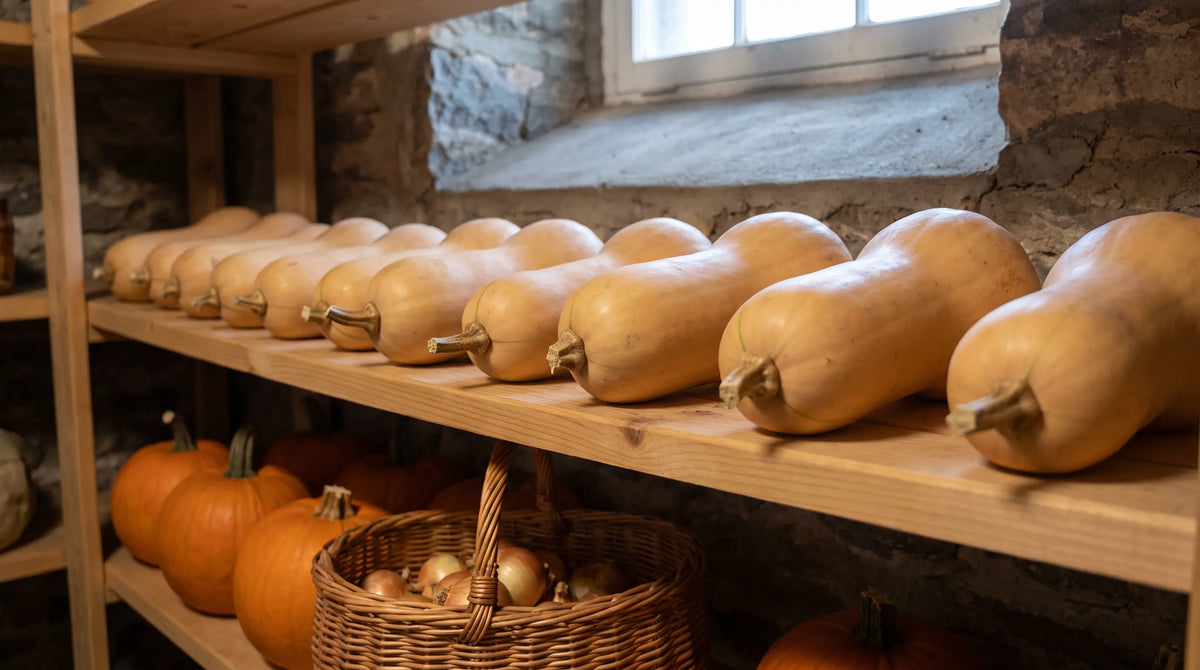
Once cured, your squash wants the opposite: cool, dry and steady. Aim for 50 to 60°F with moderate humidity, roughly 50 to 70 percent. A closet on an outside wall, an unheated spare room or a dry basement shelf all work. A garage is fine only if it stays above 50°F, and most northern garages don't by midwinter.
The classic mistake in storing butternut squash is the fridge. Weeks below 50°F cause chilling injury: the squash looks fine, then pits and rots soon after it comes out. A warm kitchen dries squash out faster, and big temperature swings make moisture condense on the skin, which encourages rot.
Lay the squash in a single layer, not touching, so one rotting squash can't spoil its neighbors, and set them on a wooden shelf or cardboard rather than cold, damp concrete. Keep them away from apples and pears too, since the ethylene gas they give off shortens storage life.
How long does butternut squash last?
Cured well and kept cool, butternut usually lasts two to six months, and fully ripe squash with sound, corky stems reach the long end. Cook the scuffed ones first, since every nick is a way in for rot, along with the small, late-set fruit, which are often the least mature.
| Butternut squash | How long it keeps |
|---|---|
| Whole and cured, at 50 to 60°F | 2 to 6 months |
| Cut or cooked, in the fridge | 3 to 4 days |
| Cooked, in the freezer | Up to a year |
What about pumpkins and onions?
Pie and field pumpkins follow the same routine: about ten days of warm, dry curing to toughen the skin, then cool, dry storage. Most keep only two to three months, though, so cook them first and let the butternut wait.
Sale

Sugar Pie Pumpkin Seeds – Non-GMO HeirloomBest for bakingSmall, sweet baking pumpkin with smooth, fine-grained flesh for pies and puree. Cure it like butternut, then cook it first, since it won't keep as long.
Price$4.99Starting at$3.99
Sale

Connecticut Field Pumpkin Seeds – Non-GMO HeirloomClassic carverThe classic big, ribbed orange pumpkin for carving. Cured and kept whole in a cool, dry spot, it lasts well past Halloween.
Price$4.99Starting at$3.99
Onions need a cure too: two to four weeks somewhere warm, dry, shaded and airy. Leave the tops on until the necks are papery and pinched tight, since rot enters through a green neck. Thick-necked or bolted onions store poorly, and sweet types like Walla Walla last only a few weeks, so cook those first. Store pungent keepers colder than your squash, around 35 to 40°F, in mesh bags or braids, and they'll last for months. Our guide to harvesting onions has the details.
Sale

Onion Seeds Variety Pack – Non-GMO HeirloomBulbs and scallionsYellow, white and red heirloom bulb onions plus a scallion in one box. Cure the bulbs in airy shade, eat the sweet ones first and keep the pungent ones for winter.
Price$12.99
Sale Price$7.99
How to tell if butternut squash is bad
Every week or two, turn each stored squash over and press it gently. A sound one is rock hard all over. Trouble usually starts at the blossom end, around the stem or at an old nick: soft, sunken or water-soaked patches, mold or a sour smell. A wrinkled neck means it's drying out, so cook it soon.
Use the soft ones first. A small soft spot doesn't doom the whole squash: cut away at least an inch around it and cook the rest that day. If mold reaches into the flesh, or the inside is slimy or smells off, compost it, wipe the shelf and check its neighbors.
How to store cut butternut squash (and freeze it)
Once a squash is cut, it goes in the fridge. Scoop out the seeds and pulp, wrap the cut face tightly or seal the pieces in a container, and use them within three to four days.
Freezing butternut squash keeps it far longer, and cooked squash freezes best. Roast or steam it until soft, mash it or leave it in chunks, cool it quickly, then pack it into freezer bags or containers with about half an inch of headspace. Raw cubes freeze too, spread on a tray first, but they thaw soft and are best cooked from frozen. Freeze puree rather than canning it, since the only tested home method is pressure canning cubes.
Ran out before winter did? Plant a few more vines next spring.
Frequently asked questions
How long does butternut squash last?
Cured butternut kept at 50 to 60°F usually lasts two to six months, and well-ripened squash with intact stems last longest. A warm counter shortens that, so keep only the next one or two there. Cut or cooked squash keeps three to four days in the fridge; cooked squash keeps up to a year frozen.
Does butternut squash need to be refrigerated?
Not while it's whole. Weeks below 50°F cause chilling injury, so a squash stored in the fridge pits and rots soon after it warms up. A cool room is the better home. Refrigerate it only after cutting: wrap the cut face or seal the pieces in a container and use them within three to four days.
Do you have to cure butternut squash before storing it?
If you want it to keep for months, yes. One to two weeks somewhere warm and airy hardens the rind, seals small nicks and dries the stem, and the flesh starts getting sweeter. Squash you'll cook within a few weeks can skip it, though freshly picked butternut is often starchy and bland.
How can you tell if butternut squash is bad?
Look for soft, sunken or water-soaked patches, mold or a sour smell, often starting at the stem or blossom end. Inside, a bad squash is slimy or mushy instead of firm and bright orange. A small soft spot can be cut away with an inch to spare, but anything worse belongs in the compost.
Can you freeze butternut squash?
Yes. Cooked squash freezes best: roast or steam it, mash it or keep it in chunks, cool it quickly and pack it with a little headspace. It keeps good quality for up to a year. Raw cubes work too if frozen on a tray first, but they thaw soft. Squash soup freezes well; add any cream after thawing.

- Choosing a selection results in a full page refresh.
















 Easy Returns 30-day guarantee