


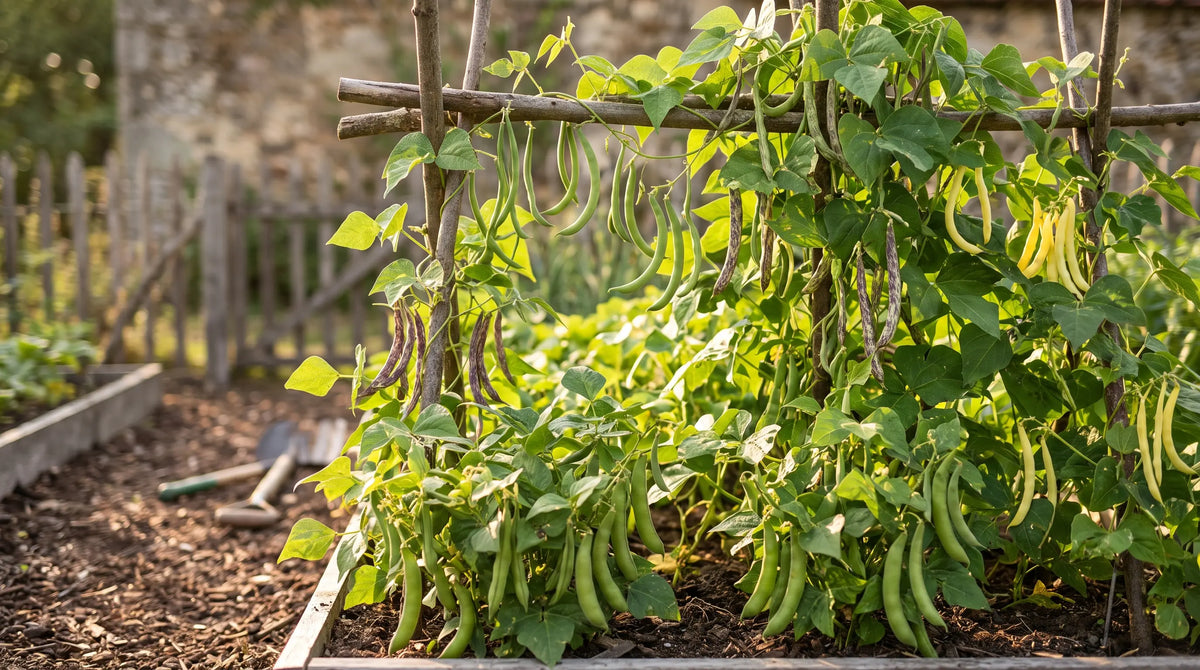
How to Grow Beans From Seed
Updated July 2026
Beans are one of the easiest, most productive crops for any garden, and as nitrogen-fixing legumes they even improve your soil as they grow. Direct-sow them into warm soil after frost, give them sun and steady water, and bush and pole types alike will deliver heavy pickings all summer. This complete guide covers every step from seed to harvest, and it works for every bean we grow, from snap beans to limas.
Best tip
At a glance
 Botanical name Botanical name | Phaseolus vulgaris (lima: Phaseolus lunatus) |
|---|---|
 Plant type Plant type | Warm-season annual legume (nitrogen-fixing) |
 USDA zones USDA zones | 3 to 12 (grown as a warm-season annual) |
 Sun Sun | Full sun (6 to 8+ hours) |
 Days to maturity Days to maturity | 50 to 60 days snap; 75 to 90 shell/lima |
 Height Height | Bush 16 to 24 inches; pole 6 to 10 feet |
 Spacing Spacing | 2 to 4 inches apart; rows 18 to 24 inches |
 Water Water | Steady and even; keep soil evenly moist |
When to plant
How to plant
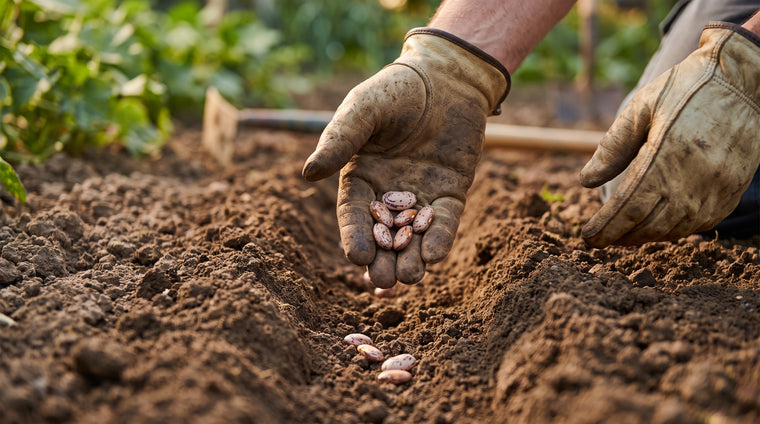
Growing and care
Sale

Mycorrhizal Fungi GranulesFeeds roots naturallyMix a little into the row at sowing to help young bean roots take up water and nutrients — no high-nitrogen feed needed.
Price$39.99Starting at$29.99
The best companion plants
Sale

Marigold Seeds PackPest-deterring companionMarigolds planted along bean rows help repel bean beetles and root pests while feeding pollinators.
Price$12.99Starting at$8.99
Sale

Nasturtium Seeds for Sale – Non-GMO HeirloomAphid trap cropNasturtiums lure aphids away from your beans and sprawl as a living mulch — an easy, edible companion.
Price$14.99Starting at$6.99
Sale

Holy Basil Seeds – Tulsi, Non-GMO HeirloomFragrant pest-confuserBasil grown near beans helps mask them from pests and makes good use of the same warm, sunny bed.
Price$4.99Starting at$3.99
Harvest
Uses
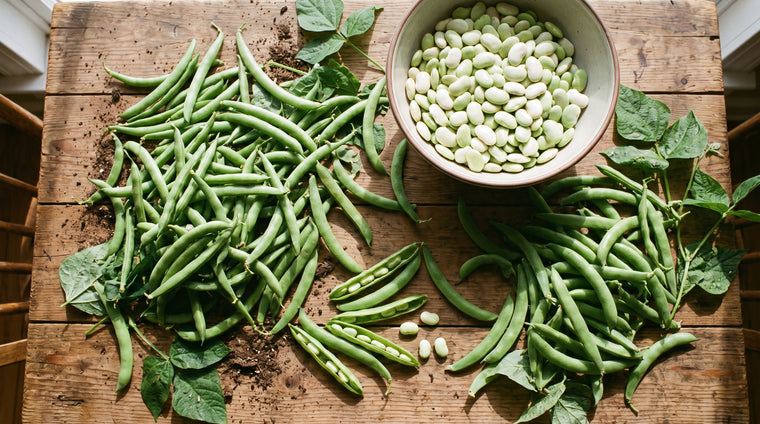
Common problems
Frequently asked questions
How long do beans take to grow from seed?
Most snap beans are ready to pick in about 50 to 60 days from sowing, while shelling and lima types take longer, often 75 to 90 days. Because beans are direct-sown, you can start harvesting quickly once the weather warms.
Should I start beans indoors or direct-sow them?
Direct-sow beans right where they will grow. They have brittle roots that resent being moved and transplant poorly, so wait until the frost has passed and the soil is warm, then sow the seeds straight into the ground.
What is the difference between bush beans and pole beans?
Bush beans grow as compact, self-supporting plants about knee-high and set most of their crop in a couple of concentrated flushes, so they need no trellis. Pole beans climb 6 to 10 feet, need a trellis or poles, and produce steadily over a longer season.
Do beans need fertilizer?
Not much. As nitrogen-fixing legumes, beans make their own nitrogen with help from soil bacteria, so avoid high-nitrogen feeds, which give you leafy plants and few pods. Rich, well-drained soil and steady water are all most beans need.
How often should I pick beans?
Pick snap beans every two to three days once they start producing. Frequent harvesting while the pods are still tender signals the plant to keep flowering and setting new beans, so regular picking gives you a much longer, heavier crop.
What is the difference between snap beans and shell or lima beans?
Snap beans are eaten whole, pod and all, while they are young and tender. Shell and lima beans are grown for the seeds inside, which you shell out of the pod and eat fresh or dried. Lima beans in particular need warmer soil and a longer season.
Sale

Vegetable Seeds Variety Pack55 vegetable varietiesBeans plus 54 more vegetables in one pack — the easiest way to fill a whole garden from a single order.
Price$21.99Starting at$17.99
Want a whole vegetable patch? These value packs bundle beans with many other varieties in one order:

- Choosing a selection results in a full page refresh.





















 Easy Returns 30-day guarantee