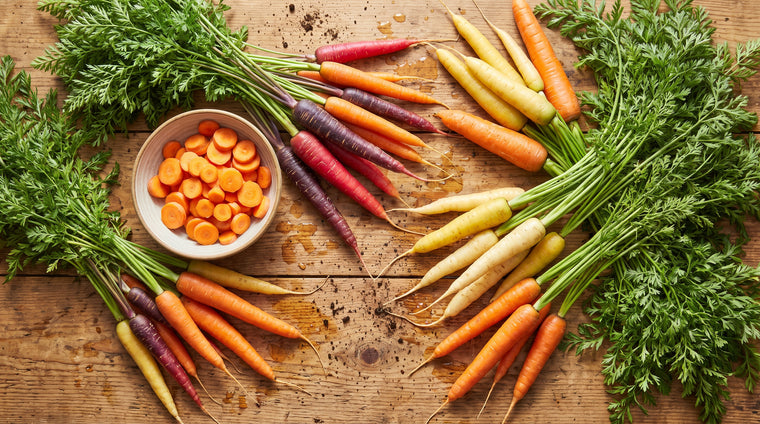
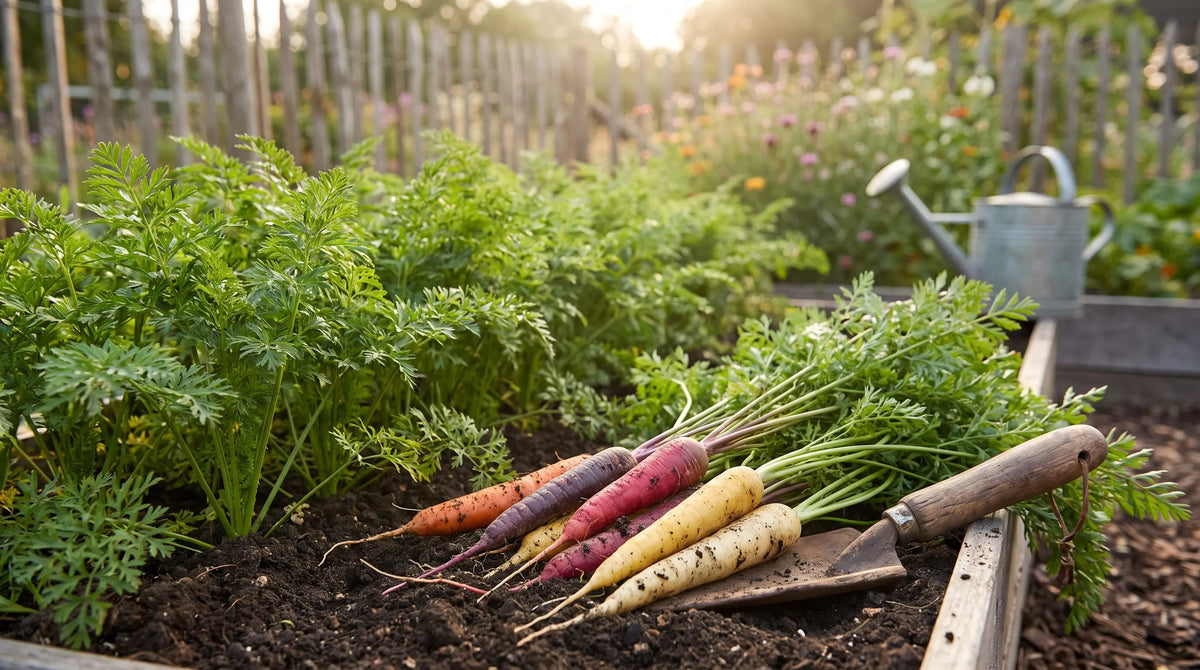
A thriving garden bed of carrots in orange, purple, red, yellow, and white

How to Grow Carrots From Seed

Updated July 2026

Sweet, crisp carrots are one of the most satisfying roots to grow, and they do best sown straight into the garden where they will grow rather than transplanted. With loose, stone-free soil, patience through their slow germination, and steady moisture, you can grow long, tender carrots in every color, from classic orange to purple, red, yellow, and white. This complete guide covers every step from seed to harvest, and it works for every carrot we grow.

Best tip

The single biggest thing you can do for carrots is give them loose, stone-free soil at least 8 to 10 inches deep and then be patient with germination. Sow shallow, keep the surface constantly moist for the 2 to 3 weeks it takes to sprout, and never let it crust over. In hot regions like Texas and the South, sow in early spring and again in late summer for a fall crop, since carrots color up sweetest in cool weather; in the North and Pacific Northwest, spring through midsummer sowings work well. Avoid fresh manure, which makes roots fork.

At a glance

Botanical nameDaucus carota subsp. sativus
Plant typeCool-season biennial grown as an annual
USDA zones2 to 11 (grown as an annual)
SunFull sun (6+ hours); tolerates light shade
Days to maturity55 to 75 days from sowing
HeightTops 8 to 12 inches; roots 3 to 10 inches
SpacingThin to 2 to 3 inches apart
WaterEven and steady; about 1 inch a week

When to plant

Carrots are cool-season roots that are sown directly in the garden, not started indoors. Sow the first crop 2 to 3 weeks before your last spring frost, once the soil can be worked, and continue sowing small batches every few weeks for a steady supply. For a fall harvest, sow again about 10 to 12 weeks before your first fall frost. Carrots grow best when temperatures sit between 60 and 70F, and a light fall frost actually makes them sweeter.

How to plant

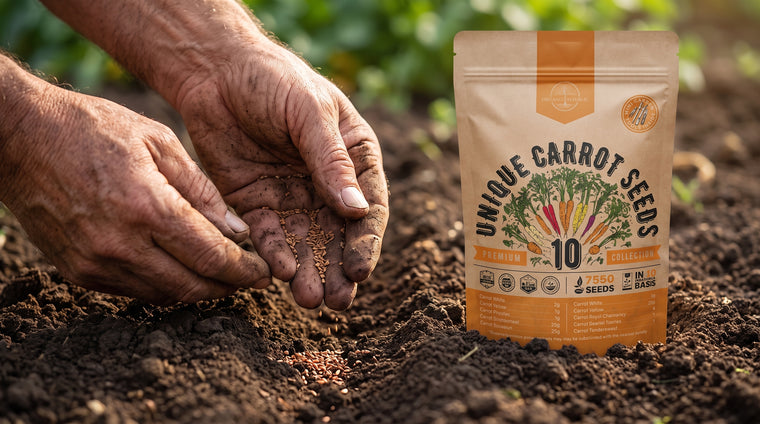
Loosen the bed at least 8 to 10 inches deep and rake out every stone and clod so roots grow straight. Sow seeds about a quarter inch deep, roughly half an inch apart, in rows 6 to 8 inches apart, then cover lightly and water gently. Because the seed is tiny and slow, keep the surface moist for the full 14 to 21 days it takes to germinate, covering the row with a board or light mulch to stop it drying out. Do not add fresh manure, which causes forked roots, and thin seedlings to 2 to 3 inches apart once they are a couple of inches tall.

Sow carrot seed straight into loose, stone-free soil where it will grow.

Growing and care

Carrots reward steady, even moisture and a light hand with feeding. Water deeply about an inch a week so roots grow long and never woody, and mulch to keep the soil cool and hold moisture. Skip high-nitrogen fertilizer, which grows lush tops and hairy, forked roots instead of clean carrots; a low-nitrogen feed or compost is plenty. Keep the shoulders covered with soil or mulch as they push up, so they do not turn green and bitter, and thin a second time so each carrot has room to size up.

Mycorrhizal Fungi Granules
Mycorrhizal Fungi GranulesFeeds roots naturallyMix these mycorrhizal fungi granules into the bed at sowing to help carrots build strong, deep roots in loose soil.$39.99$29.99
View product

The best companion plants

Carrots do best alongside plants that confuse or trap their pests and draw in helpful insects. Onions, leeks, lettuce, radishes, and aromatic herbs all pair well, while dill and mature tomatoes are best kept at a distance. These three companions are especially easy to add in one click:

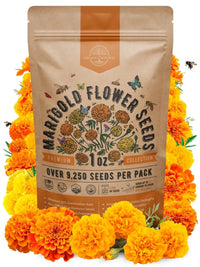
Marigold Seeds Pack
Marigold Seeds PackGreat carrot companionMarigolds help repel root-knot nematodes and carrot pests, and their bright flowers draw in beneficial insects.$12.99$8.99
View product
Nasturtium Seeds
Nasturtium SeedsGreat carrot companionNasturtiums act as a trap crop for aphids and carrot pests, keeping them off your rows while adding edible blooms.$14.99$6.99
View product
Holy Basil Seeds
Holy Basil SeedsGreat carrot companionAromatic basil planted nearby helps mask the scent that draws carrot flies, and it thrives in the same sunny bed.$4.99$3.99
View product

Carrots hate to be crowded, rushed, or transplanted. Sow them where they will grow, since disturbing the taproot causes forking, and never skip thinning, because crowded carrots stay thin and small. Fresh manure and rocky soil also cause split, hairy, or misshapen roots, so use loose, stone-free soil and only well-rotted compost.

Harvest

Carrots are ready to pull about 55 to 75 days after sowing, once the shoulders are the size you want, though flavor is sweetest when they reach full size. Loosen the soil beside each root with a fork before pulling, so the carrot does not snap off in the ground. In mild areas you can leave carrots in the soil and harvest through winter under a thick mulch, digging as needed.

Uses

Carrots are one of the most versatile roots in the kitchen, good raw, roasted, steamed, juiced, or grated into cakes and slaws. Different colors bring their own character: orange types are the all-purpose classic, while purple, red, yellow, and white carrots add color to a plate and a little variety in flavor. The feathery tops are edible too, chopped into soups or made into pesto, and carrots store for months in a cool spot.

Carrots in every color, freshly pulled for the kitchen.

Common problems

  • Poor germination: the seed is slow and dries out easily. Keep the surface moist for 14 to 21 days and cover the row with a board or light mulch until sprouts appear.
  • Forked or twisted roots: caused by stones, heavy soil, or fresh manure. Loosen the bed deeply, remove rocks, and use only well-rotted compost.
  • Thin, stunted carrots: usually from skipping thinning. Thin seedlings to 2 to 3 inches apart so each root has room to size up.
  • Green shoulders: the tops of roots turn green and bitter when exposed to light. Mound soil or mulch over the shoulders as they push up.
  • Carrot rust fly: maggots tunnel into roots. Use a floating row cover, avoid crushing the foliage, and interplant with onions or aromatic herbs to mask the scent.

Frequently asked questions

How long do carrots take to grow from seed?

Most carrots are ready to harvest in about 55 to 75 days from sowing, depending on the variety. Small types like Little Fingers and Parisian mature fastest, while long storage types take a little longer. Carrots often taste sweetest if left in the ground until fully sized.

Why won't my carrot seeds germinate?

Carrot seeds are slow, taking 14 to 21 days, and they fail most often because the soil surface dries out. Keep the top of the bed constantly moist until seedlings appear, and try covering the row with a board or light mulch to hold moisture. Old seed also germinates poorly, so use fresh seed each season.

Can you transplant carrots?

Carrots do not transplant well because disturbing the taproot causes forked or stunted roots. Always sow carrot seed directly where the plants will grow, rather than starting them in trays. For containers, sow straight into the final pot.

Why are my carrots forked or twisted?

Forked and twisted carrots usually come from rocky or heavy soil, or from fresh manure that makes roots split and branch. Loosen the bed at least 8 to 10 inches deep, remove stones, and avoid fresh manure. In heavy or clay soil, choose short stocky types like Royal Chantenay or round Parisian.

How far apart should I thin carrots?

Thin seedlings so the remaining carrots stand about 2 to 3 inches apart once they are a couple of inches tall. Snip the extras at soil level with scissors rather than pulling, so you do not disturb the roots of the keepers. Crowded carrots stay thin and small, so thinning is the step most gardeners skip and regret.

Can I grow carrots in containers?

Yes, carrots grow well in deep pots and containers as long as they are at least 8 to 10 inches deep with loose, stone-free potting mix. Round Parisian and short Little Fingers types are ideal for shallow or container growing. Keep the mix evenly moist, since pots dry out faster than garden beds.

Ready to grow your own? Start with a multi-variety carrot pack and grow a whole rainbow of carrots, from classic orange to purple, red, yellow, and white, from a single order.

10 Unique Carrot Seeds Variety Pack
10 Unique Carrot Seeds Variety Pack10 carrot varietiesTen unique carrots in one pack, from classic orange to purple, red, yellow, and white. The easiest way to grow a whole rainbow of carrots.$14.99$13.49
View product

Want a whole carrot patch? These value packs bundle several varieties in one order:

Maxim Kaufman, Founder and CEO of Organo Republic

By Maxim Kaufman — Founder & CEO, Organo Republic

Maxim founded Organo Republic in 2017 and personally selects, tests, and grows the heirloom, non-GMO varieties the company offers. Under his leadership, Organo Republic was named Agri Business Review’s Top Non-GMO Seed Variety Solution 2026.