


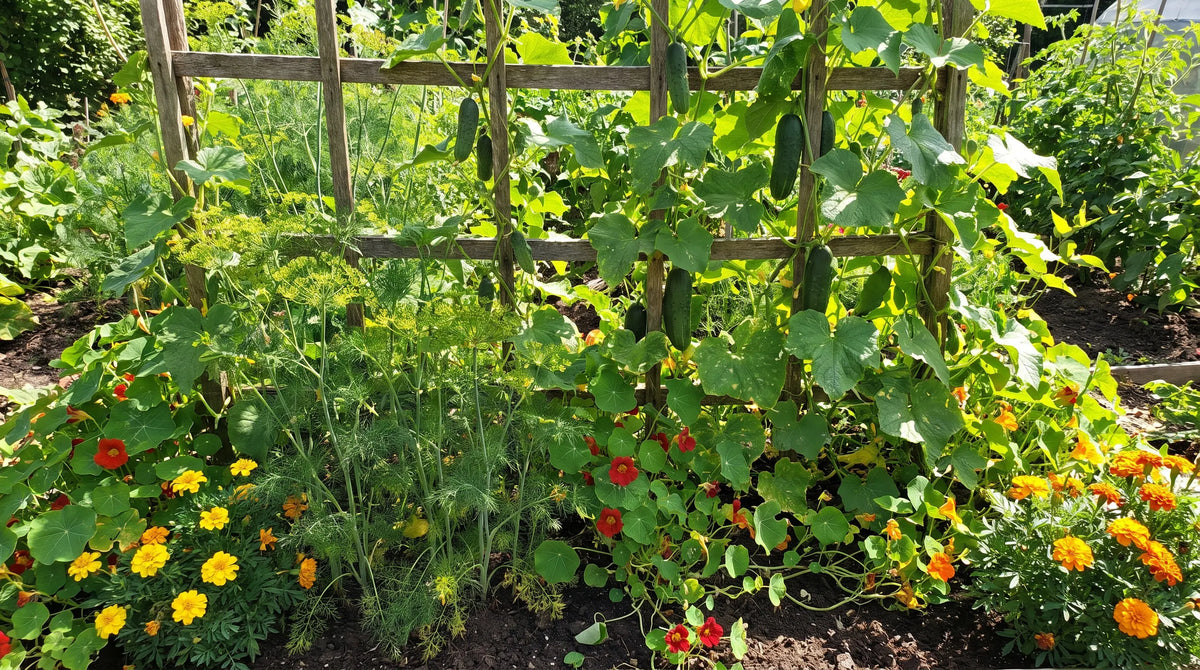
Cucumber Companion Plants: What to Grow and What to Avoid
Updated August 2026
The plants you set next to your cucumbers can make the difference between a struggling vine and a heavy, healthy harvest. The best cucumber companion plants pull in the bees your vines need for pollination, lure cucumber beetles and aphids away from the leaves, feed the soil, and make smart use of the ground and vertical space around each plant. Here is exactly what to plant with cucumbers, what to keep away from them, and how to lay it all out.
For the bigger picture, see our complete companion planting chart for what to plant together across the whole garden.
Quick answer
Plant cucumbers with: beans, peas, corn, radishes, nasturtiums, marigolds, dill, borage, sunflowers, and lettuce.
Keep cucumbers away from: potatoes, strong aromatic sage, and fennel, and give melons and squash room for airflow.
The best companion plants for cucumbers
These are the companions that earn their place in a cucumber patch. Each one solves a specific problem, whether that is pollination, pests, soil, structure, or space. Weave a few of these in and your companion plants for cucumbers will do real work all season.
1. Beans and peas
Beans and peas are nitrogen fixers, working with soil bacteria to pull nitrogen from the air and leave the soil richer for their neighbors. Cucumbers are hungry feeders, so that steady supply of nitrogen supports strong vine and leaf growth. Both are easy to tuck in around the base of a trellis, and peas will even share the same support early in the season before the cucumbers take over.
2. Corn
Tall corn gives cucumbers a living support to climb and casts a little light shade during the hottest part of summer, which can ease heat stress on the vines. In return, the sprawling cucumber vines shade the soil around the corn and help hold in moisture. Plant corn to the north side so it never blocks the sun your cucumbers need.
3. Radishes
Radishes are one of the smartest interplanting choices for cucumbers. They sprout and mature fast, so you can sow them right at the cucumber hills and pull them long before the vines need that space. They also help lure cucumber beetles away from your young cucumber plants, so a quick early crop of radishes does double duty.
4. Nasturtiums
Nasturtiums work as a trap crop, drawing aphids and cucumber beetles to themselves and away from your cucumber leaves and fruit. Their bright, open flowers also attract bees and other pollinators, which cucumbers rely on to set fruit. As a bonus, the leaves and blooms are edible and trail nicely as a living ground cover.
5. Marigolds
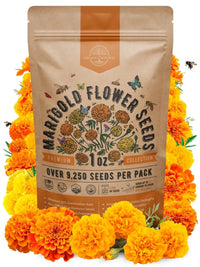
Marigolds are a garden workhorse for pest control. Their roots help deter root-knot nematodes in the soil, and their strong scent confuses many pest insects, including cucumber beetles, while the bright blooms draw in beneficial insects like ladybugs and hoverflies. Plant them around the edges of the cucumber patch for easy, colorful protection.
6. Dill and borage
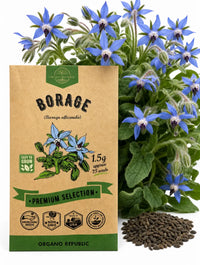
Flowering herbs like dill are a magnet for the predatory and parasitic wasps that hunt aphids and other soft-bodied pests, and dill also brings in pollinators when you let it flower. Borage may be the single best flower to plant with cucumbers: its true-blue, star-shaped blooms pull in bees for better pollination and fuller fruit set, and it is believed to deter some pests as well. Let a few plants of each flower rather than cutting them all.
7. Sunflowers and lettuce
Sunflowers can act as a natural trellis for cucumber vines to climb while their large blooms feed pollinators, so long as you site them where their height will not shade the cucumbers. Low, leafy lettuce works the other way, growing as a living mulch under the vines that shades the soil, holds in moisture, and crowds out weeds. Lettuce also appreciates the light shade the cucumber canopy gives it as summer heats up.
What not to plant near cucumbers
A few neighbors do more harm than good. These are the ones to keep out of the cucumber patch.
Potatoes
Potatoes are heavy feeders that compete hard with cucumbers for water and nutrients, and the two can share blight and other soil-borne diseases. Growing them side by side stresses your cucumbers and raises disease pressure, so keep the two well separated in the garden.
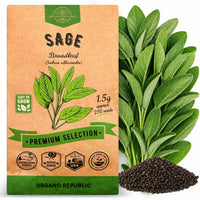
Strong aromatic sage
Sage is a wonderful herb, but its strong aromatic oils are thought to stunt the growth of cucumbers planted right beside it. Cucumbers are sensitive to some strongly scented herbs, so give sage its own spot away from the cucumber bed rather than tucking it in among the vines.
Fennel
Fennel is famously a poor companion for almost everything. It is allelopathic, releasing compounds that can slow or inhibit the growth of most nearby vegetables, cucumbers included. If you grow fennel, give it its own corner well away from the cucumber patch.
Melons and squash (a nuanced note)
Melons, squash, and zucchini are cousins of cucumber in the cucurbit family, and they share the same pests and diseases, including cucumber beetles and powdery mildew. You can grow them in the same garden, but do not crowd them together. Give each plant room and keep airflow open so powdery mildew and shared pests do not sweep through all of them at once. For more on those cousins, see our guides to zucchini companion plants and watermelon companion plants.
Why companion planting works for cucumbers
Companion planting is not folklore alone. With cucumbers, it lines up with a few very practical needs of the crop.
- Pollination. Cucumbers have separate male and female flowers, and bees must carry pollen between them for fruit to form. Flowers like borage, nasturtiums, and marigolds pull in more bees, which means better fruit set and fewer small or misshapen cucumbers.
- Pest control. Trap crops like nasturtiums draw cucumber beetles and aphids away, marigolds help deter nematodes, and flowering herbs like dill invite the beneficial insects that prey on pests.
- Living mulch and ground cover. Low companions like lettuce shade the soil, hold in moisture, and crowd out weeds around the base of the vines.
- Structure and space. Corn and sunflowers give vines something to climb, while quick crops like radishes fill the gaps early in the season before the cucumbers sprawl out.
If you want the full sowing, watering, and trellising routine for the crop itself, read our cucumber growing guide.
How to lay out cucumber companions
A little planning makes companion planting easy. Whether you trellis your cucumbers or let them run, build the companions around them.
- Give the vines room. Space cucumber plants about 12 inches apart along a trellis, or set hills 3 to 4 feet apart if you let them sprawl, and keep them away from big cucurbit cousins.
- Sow quick crops at the hills. Tuck fast radishes and low bush beans right around the cucumbers early in the season. You will harvest or turn them under before the vines need that space.
- Ring the edges with flowers. Plant marigolds, nasturtiums, borage, and dill around the border of the patch to draw pollinators in and steer pests away from the fruit.
- Keep tall plants to the north. Set corn and sunflowers along the north edge so they support the vines without casting shade over your sun-loving cucumbers.
Get the neighbors right and your cucumber patch will be better pollinated, better protected, and more productive. Want more pairings like this? See our guide to tomato companion plants, and browse the full cucumber seeds collection to get planting. Below you will find the exact non-GMO, heirloom seeds we grow alongside our own cucumbers.
The best companion plants

Contender Bush Bean Seeds – Non-GMO HeirloomFeeds the soilFixes nitrogen in the soil to feed hungry, fast-growing cucumber vines.
Price$4.99
Sale

Golden Bantam Sweet Corn Seeds – Non-GMONatural supportLiving trellis and light afternoon shade for climbing cucumber vines.
Price$5.99
Sale Price$4.99
Sale

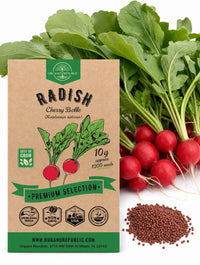
Cherry Belle Radish Seeds – Non-GMO HeirloomEarly interplantQuick to sprout, lures cucumber beetles away, and pulls before vines spread.
Price$4.99Starting at$3.99
Sale

Nasturtium Seeds for Sale – Non-GMO HeirloomPest trap cropTrap crop that lures aphids and cucumber beetles away from your cucumbers.
Price$14.99Starting at$6.99
Sale

Marigold Seeds PackNatural pest guardDeters cucumber beetles and root-knot nematodes and draws in beneficial insects.
Price$12.99Starting at$8.99
Sale

Borage Seeds – Non-GMO HeirloomPollinator magnetBlue blooms pull in bees for better pollination and fuller fruit set.
Price$5.99Starting at$4.99
Frequently asked questions
What should you not plant near cucumbers?
Keep cucumbers away from potatoes, strong aromatic sage, and fennel. Potatoes compete for water and nutrients and can share blight. Sage's strong oils are thought to stunt cucumbers, and fennel is allelopathic, releasing compounds that inhibit most nearby vegetables. Other cucurbits like melons, squash, and zucchini can share the garden, but give them room and airflow because they share pests such as cucumber beetles and diseases like powdery mildew.
Can you plant cucumbers and tomatoes together?
Yes, cucumbers and tomatoes can grow together, and many gardeners do it successfully. They are not in the same plant family, so they do not swap the worst pests and diseases the way cucumbers and squash do. Give each plant its own space and a trellis so airflow stays good and neither shades the other, since both are heavy feeders that like full sun and steady water.
Do cucumbers need companion plants?
Cucumbers do not strictly need companions, but the right ones make a real difference. Flowers like borage, nasturtiums, and marigolds pull in the bees that cucumbers depend on for pollination and help keep pests down. Beans and peas add nitrogen to the soil, and quick crops like radishes make good use of space before the vines sprawl. Companion planting is an easy, natural way to grow healthier, more productive cucumbers.
What is the best companion plant for cucumbers?
If you pick one, make it borage. Borage is a pollinator powerhouse whose blue flowers draw in the bees that cucumbers need to set fruit, and it is thought to deter some pests too. Nasturtiums are a close second as a trap crop that pulls aphids and cucumber beetles away from your vines. Most gardeners get the best results by combining a pollinator flower with a pest-deterring one.
Can cucumbers and zucchini grow together?
They can, but it is best not to crowd them. Cucumbers and zucchini are both cucurbits, so they attract the same pests, like cucumber beetles and squash bugs, and are prone to the same diseases, such as powdery mildew. If you grow them near each other, space them well apart, keep airflow open, and scout for pests early so a problem in one crop does not spread to the other.

Marketmore 76 Cucumber Seeds – Non-GMO HeirloomNon-GMO heirloomClassic heirloom slicer with crisp, mild, non-bitter fruit on productive vines.
Price$4.99

- Choosing a selection results in a full page refresh.











 Easy Returns 30-day guarantee