


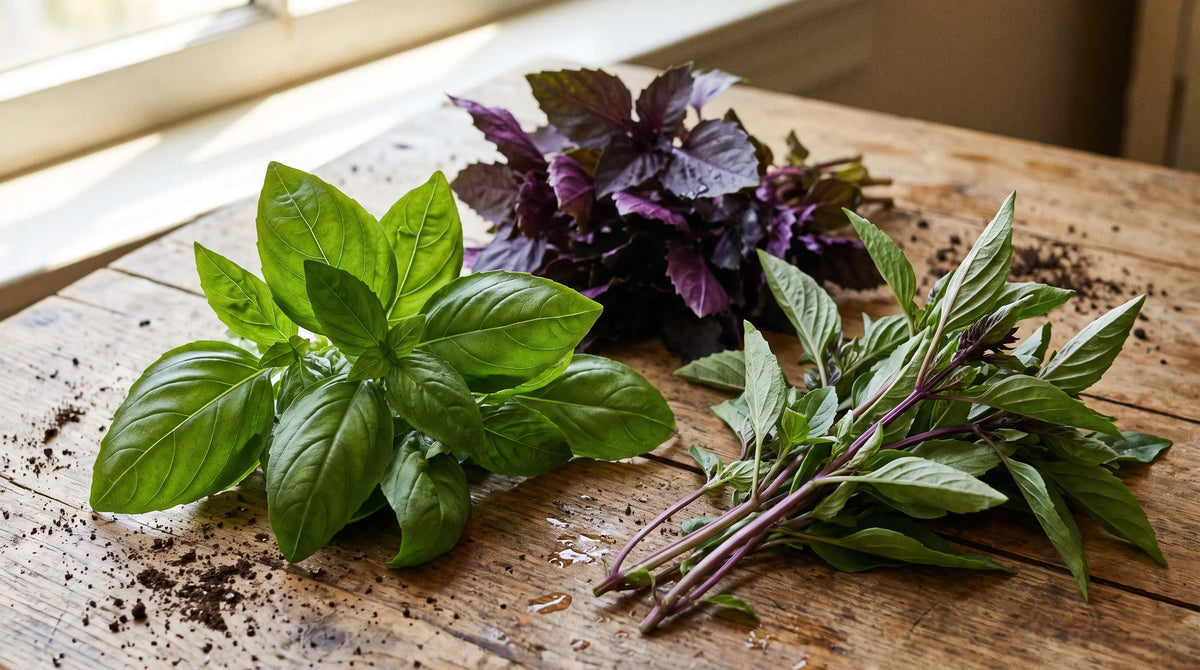
13 Types of Basil and How to Use Each One in the Kitchen
Updated October 2026
You tear a handful of leaves labeled only "basil," stir it into a curry at the last minute, and something tastes flat and clove-heavy instead of bright and anise-sweet. That is not your cooking. It is the wrong basil. One small word covers dozens of varieties across several different species, and they are not interchangeable. Some lean sweet and peppery, a few carry a real black-licorice punch, and others taste like lemon or lime rind.
Once you learn the handful of flavor camps, matching the right leaf to the right dish gets easy. Here are 13 types of basil worth knowing, what each one tastes like, and where it earns its place in your kitchen.
One name, many flavors
Most basil sorts into five loose flavor camps: the sweet, clove-scented Italian types behind pesto, the anise and licorice basils used across Southeast Asia, the bright citrus basils, the warm spice basils, and the deep purple varieties grown as much for color as for taste. Those differences are not marketing. They come from the balance of aromatic oils in the leaf, so the clove note in the Italian types leans on an oil called eugenol, while the licorice punch in the Asian ones comes from one called methyl chavicol. Sort by flavor first and the right pick becomes obvious.

| Type | Flavor | Best in the kitchen |
|---|---|---|
| Sweet Basil (Italian Large Leaf) | Sweet, clove, peppery | Pesto, Caprese, tomato sauce |
| Genovese Basil | Rich and sweet, classic | Pesto, pasta, pizza |
| Napoletano Basil | Mild and sweet, ruffled | Fresh sauces, sandwiches |
| Lettuce Leaf Basil | Soft and mild, very large | Wraps, salads, layering |
| Thai Basil | Anise, licorice, light spice | Stir-fries, curries, pho |
| Holy Basil (Tulsi) | Peppery, sharp, clove | Thai holy basil stir-fry, tea |
| Lemon Basil | Bright, citrus | Grilled fish, dressings, tea |
| Lime Basil | Zesty, citrus | Seafood, salsa, marinades |
| Cinnamon Basil | Warm, sweet, spicy | Fruit, baked goods, tea |
| Purple Basil (Dark Opal) | Mild, gently spicy | Infused vinegar, garnish, color |
| Greek Basil | Small leaves, sweet, mild | Containers, whole-leaf garnish |
| Spicy Globe Basil | Compact, peppery | Pots, whole leaves, garnish |
| African Blue Basil | Camphor, spice, ornamental | Pollinator plots, light garnish |
The sweet Italian basils
This is the group most people picture when they hear the word, and it is all one species. Sweet basil carries the soft clove-and-pepper aroma that rounds out a good marinara, and the Italian Large Leaf strain gives you broad, tender leaves that break down into a smooth, deep-green pesto. Genovese is its more refined cousin, with large cupped leaves and a fuller, sweeter perfume that holds up after a long simmer. One thing worth knowing: basil's aroma lives in fragile oils that cook off with heat, so stir it into a sauce in the last minute or two rather than at the start, and tear the leaves instead of chopping them to keep the cut edges from bruising and blackening.
Need bigger leaves for wrapping or layering? Lettuce Leaf grows crinkled, tender foliage nearly as wide as your palm, soft enough to fold into a sandwich or roll around a filling in place of a wrapper. Napoletano runs large and ruffled too, with a gentle sweetness that lets it sit on sliced tomatoes and fresh mozzarella without shouting over them. Any of these four makes a dependable, all-purpose kitchen basil, and all of them come true from seed so you can grow the same leaf every year.
Sale

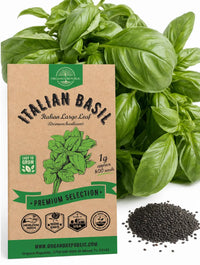
Sweet Basil Seeds – Italian Large Leaf, Non-GMO HeirloomBest for pestoBroad, cupped, tender leaves that blend into a smooth, deep-green pesto and melt into tomato sauce. This non-GMO heirloom Italian Large Leaf basil is a vigorous, generous grower that comes true from seed year after year.
Price$4.99Starting at$3.99
The Asian basils
Thai basil is a different animal. Its narrow, sturdy leaves and purple stems come from a variety of that same sweet-basil species bred for a bold anise-and-licorice punch, and unlike the tender Italian types it shrugs off the heat of a screaming-hot wok. That is why it belongs in stir-fries, coconut curries, and pho, where the leaves go in at the very end or get piled on raw at the table. Add it early and that licorice note simply cooks away, leaving you with soft green leaves and none of the aroma you grew it for.
Sale

Thai Basil Seeds – Licorice, Non-GMO HeirloomStir-fry stapleSturdy, anise-rich leaves and purple stems that keep their flavor in a hot wok. Made for stir-fries, coconut curries, and pho, and a fast, resilient non-GMO grower from seed.
Price$4.99Starting at$3.99
Holy basil, sold as tulsi, is a different species altogether, and it tastes the part. It is peppery and sharp with a hot, clove-and-camphor edge. It is the leaf behind pad kaphrao, the garlicky, chili-spiked Thai stir-fry served over rice with a fried egg, and it also steeps into a warm, spicy cup of tea. Cook it hard and fast in a hot pan so the aroma blooms, because raw holy basil tastes noticeably greener and rougher than sweet basil and needs the heat to come into its own.
The citrus and spice basils
Lemon basil smells exactly like it sounds, a clean citrus lift that comes from the same citral found in lemon peel. A handful torn over grilled fish, stirred into a summer vinaigrette, or dropped into a pitcher of iced tea wakes the whole plate up. Lime basil pushes the same idea toward a sharper, more floral zest that flatters seafood, fresh salsa, and quick marinades for chicken or shrimp. Both are best raw, since their delicate citrus oils are the first thing to burn off under heat.
Cinnamon basil trades citrus for warmth, and its sweet, spicy scent comes from methyl cinnamate, the same compound behind the smell of cinnamon itself. The leaves are lovely with sliced peaches and other stone fruit, folded into simple baked goods, or steeped into a fragrant pot of tea, and a little goes a long way, so start with a few leaves and taste as you build. Like the citrus basils, these lose their perfume fast once cut, so add them at the very end and use them the same day for the fullest aroma.
The purple and compact basils
Dark Opal is the showpiece. Its glossy, deep-purple leaves carry a mild, gently spicy flavor and real drama on the plate, and that color is anthocyanin pigment, the same family that reddens cabbage and blueberries. Steep a handful in white vinegar and the acid draws the pigment out into a bottle that glows rose-pink, ideal for vinaigrettes and homemade gifts, while the raw leaves make a garnish that stops people mid-bite. One note from experience: purple basils tend to be a touch slower and less uniform from seed than the green types, so give them your warmest, sunniest spot and a little patience.
Sale

Purple Basil Seeds – Dark Opal, Non-GMO HeirloomColor and garnishGlossy, deep-purple Dark Opal leaves for color, garnish, and rose-pink vinegar. A striking non-GMO heirloom that earns its place in the bed and on the plate; give it your warmest, sunniest spot for the deepest color.
Price$4.99Starting at$3.99
When counter space or garden room runs short, the small-leaved basils earn their keep. Greek basil forms a naturally tidy dome of tiny, sweet leaves, is slow to bolt, and is about the most forgiving basil for a pot on a sunny sill. Spicy Globe stays low and rounded with a peppery bite, perfect for edging a bed or filling a container. African Blue is a sterile hybrid grown from cuttings rather than seed, and it flowers nonstop into one of the best bee plants you can grow, with a light camphor-and-spice note for the kitchen on the side.
Getting the most from your basil
Every basil here is a warm-season annual that grows the same simple way, and it is tropical at heart. Wait until the soil is truly warm, around 70 degrees, before you sow, since cold, wet ground stalls the seed and can rot it outright. Give it full sun, steady moisture, and warmth and it usually sprouts in 5 to 10 days. Start picking once a plant stands 6 to 8 inches tall, and always pinch the tip just above a pair of leaves rather than stripping single leaves from the sides. Taking that growing tip tells the plant to give up on one tall stem and push two new branches from the node below, so every harvest makes it bushier and more productive.
Once you cut a bunch, treat it like a bouquet, not a vegetable. Trim the stems, stand them in a glass with an inch of water, and leave it on the counter, because basil suffers chilling injury below about 50 degrees and a cold refrigerator will blacken the leaves within a day or two. For the best flavor of all, cut in the morning once the dew has dried, when the leaves are full of water and their oils are at their peak, rather than in the heat of the afternoon. Treated this way, a fresh bunch stays bright and usable for the better part of a week.
The real secret to great flavor is to harvest before the plants flower. Once basil bolts, it pours its energy into making seed and the leaf oils turn soapy and bitter, so pinch off the flower spikes the moment you spot them and you will keep a plant in tender, sweet leaf for weeks longer. Grow two or three types side by side and you will always have the right leaf on hand, whether tonight calls for pesto, a fiery curry, or a citrus finish. All of our basil seeds are non-GMO heirloom varieties, so you can save seed from your strongest plants and grow the same flavors again next year. Just know that basil crosses readily from one variety to the next, so if you want seed that comes back true, let only one type flower for seed or keep the others well apart.
Related guides
- Companion Planting Chart: What to Plant Together (Full Vegetable Guide)
- Pumpkin Growing Stages: From Seed to Jack-o'-Lantern
- Types of Beans: A Complete Guide to Bush, Pole, Snap & Shell Varieties
- Types of Cucumbers: Slicing, Pickling & Specialty Varieties Explained
- Types of Melons: 15 Varieties from Cantaloupe to Honeydew
Frequently asked questions
What is the most common type of basil?
Sweet basil is the one you meet most, especially the Genovese and Italian Large Leaf strains. It carries that classic clove and pepper aroma and it is the default pick for pesto, Caprese, and tomato sauce. When a recipe just says basil, this is the leaf it means.
Which basil is best for pesto?
For pesto, reach for Genovese or Italian Large Leaf sweet basil. Both give you broad, tender leaves and a rich, sweet flavor that blends smooth without turning harsh. Skip Thai, lemon, and cinnamon basil here, since their bolder notes pull the sauce off balance.
What is the difference between sweet basil and Thai basil?
Sweet basil tastes soft, clove-like, and lightly peppery, which suits Italian cooking. Thai basil is bolder, with a clear anise and licorice note and firmer leaves that hold up under high heat. Use sweet basil in slow-cooked sauce and add Thai basil at the end of a hot stir-fry.
Can you cook with purple basil like green basil?
Yes. Purple basil like Dark Opal has a milder, gently spicy flavor and works anywhere green basil does. Most cooks grow it for the color, though, and that purple pigment dulls when cooked or blended, so it shows best raw as a garnish or steeped in vinegar for a rose-pink infusion.
Which basil grows best in a pot indoors?
Compact types do best in pots. Greek basil forms a small, tidy dome of tiny leaves and Spicy Globe stays low and bushy, so both suit a sunny sill. Indoors, light is usually the limiting factor, so give them your brightest window or a grow light and pinch often to keep the leaves coming.

- Choosing a selection results in a full page refresh.









 Easy Returns 30-day guarantee