


Types of Cucumbers: Slicing, Pickling & Specialty Varieties Explained
Updated October 2026
You want cucumbers, but the seed rack throws a dozen names at you and none of them explain what you are actually buying. Some cukes are bred for fresh eating, some for the pickle jar, and a handful are just plain fun to grow. Once you know which camp a variety falls into, picking seeds gets a lot easier. Here is how the whole family sorts out.
The three groups that matter
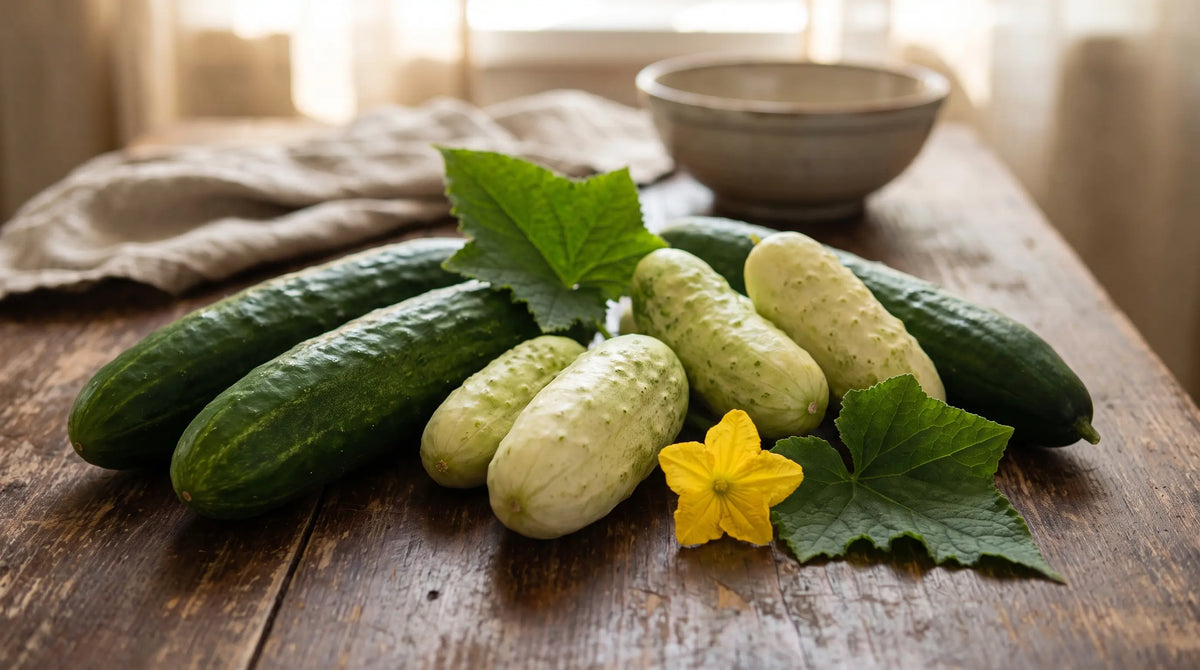
Almost every cucumber you meet lands in one of three buckets: slicing, pickling, or specialty. Slicers are the long, smooth fruits you cut for salads and sandwiches. Picklers are shorter and bumpier, bred to hold their crunch in brine. Specialty types cover everything else, from round lemon cucumbers to long, mild Asian sorts. You can eat any cucumber fresh and you can pickle almost any cucumber too, but breeders have nudged each group toward what it does best, so a variety picked for its intended job simply performs better in your kitchen.

One thing worth knowing before you buy: some cucumbers carry separate male and female flowers on the same plant, and others set mostly female flowers, which tends to mean more fruit earlier. Many heirlooms carry both kinds of bloom, and that is fine. Just do not panic when the first flush of flowers drops without setting fruit. Those early blooms are usually the males, and the females follow a week or so behind.
If you are just starting out and want to taste a bit of everything, a mixed pack takes the pressure off choosing a single winner.
Sale

Vegetable Seeds Variety PackBest VarietyA broad mix that lets you sample cucumbers alongside dozens of other vegetables in one go.
Price$21.99Starting at$17.99
Slicing cucumbers
Slicers are the workhorses of the summer garden. They grow long and even, with a skin thick enough to hold up a few days on the counter and a crisp interior built for slicing thin. Marketmore 76 is a classic here, a reliable dark green heirloom that keeps producing through the heat and shrugs off the usual leaf troubles that flatten lesser vines late in the season. Straight Eight is another old favorite if you want something a touch smoother and lighter green.
Most slicers run about 55 to 70 days from sowing to first harvest, and they earn their keep on a trellis. Give the vines something to climb and the fruit hangs straight instead of curling and yellowing on the ground where slugs find it first. The pro move is to pick slicers at 6 to 8 inches, while the skin is still glossy and the seeds are soft. Let one balloon into a fat yellow torpedo and the plant slows its whole output. A cucumber left to fully mature holds back new fruit, so a single overlooked cuke can cost you a good stretch of harvest.

Marketmore 76 Cucumber Seeds – Non-GMO HeirloomClassic SlicerA dependable dark green slicer that keeps producing through summer heat and resists the usual leaf troubles.
Price$4.99
Pickling cucumbers
Pickling types are shorter, often 3 to 6 inches, with bumpy warted skin and small seed cavities. That build is exactly what you want when the fruit hits the brine, because a dense interior with little air space stays crunchy instead of turning to mush. Boston Pickling has been in gardens for well over a century and still earns its spot, giving you heavy pickings of blocky green fruit over a long season.
Here is the real trick with picklers: harvest small and harvest often, ideally every single day once they start. Pick them at around 2 inches for cornichons, 3 to 4 for gherkins and spears. Two more tips separate a snappy jar from a soft one. First, use them within a day of picking, because a pickler that sits on the counter loses the crispness no brine can bring back. Second, if you are canning, trim a thin slice off the blossom end (the end opposite the stem). That end carries enzymes that soften a whole jar, and removing it is the oldest fix in the book.
Sale

Boston Pickling Cucumber Seeds – Non-GMO HeirloomBest for PicklesA century-old pickler that gives heavy pickings of dense, crunchy, blocky fruit.
Price$5.99
Sale Price$4.99
Specialty and burpless cucumbers
This is where cucumbers get interesting. Burpless and Asian varieties like Suyo Long grow slender and ribbed, with thin skin you never have to peel and a mild flavor. Lemon cucumbers break the mold completely, ripening into round yellow orbs about the size of a tennis ball with a sweet, almost fruity bite. Catch lemon cucumbers while the skin is pale and just blushing yellow, though. Let them go deep gold and the seeds turn hard and the flesh loses its snap. Armenian cucumbers grow long and ridged and stay crisp even when they run past a foot.
These types nearly all want a trellis, and the long ones need it. Left to sprawl, a Suyo Long or Armenian coils into a horseshoe and the underside develops a pale, tough patch. Grown vertically, they drop straight and even, which is half of why they look so good on the plate.
Quick comparison chart
| Type | Typical size | Best for | Days to harvest |
|---|---|---|---|
| Slicing | 6 to 9 inches | Fresh eating, salads | 55 to 70 |
| Pickling | 3 to 6 inches | Pickles, relish | 50 to 65 |
| Burpless / Asian | 8 to 14 inches | Fresh eating, mild flavor | 60 to 75 |
| Lemon / round | 2 to 3 inches | Snacking, fresh eating | 60 to 70 |
| Armenian | 12 to 18 inches | Fresh eating, slicing | 60 to 75 |
How to choose the right one
Start with how you plan to eat them. If your goal is salads and sandwiches all summer, plant a dependable slicer and call it done. If you dream of jars lining the pantry, go straight to a pickling variety and grow at least three or four plants, because pickling works best when you can harvest a few pounds in one go rather than dribbling in a handful at a time. Want a little adventure? Tuck in a lemon or burpless type alongside your main crop.
Space is the other deciding factor. Bush and compact varieties hold their vines to two or three feet and suit containers and small beds, while true vining types will run six feet or more and want a trellis, but they reward the room with a longer, heavier harvest. A slicer plus a pickler covers most kitchens, and adding a summer vegetable mix rounds out the rest of the garden.
A few growing basics that apply to all of them
No matter which type you pick, cucumbers want the same things, and they are fussy about timing. Sow only after the soil has warmed to around 65 to 70 degrees, because seed dropped into cold ground rots before it germinates, and even transplants sulk and stall when nights stay chilly. Give them full sun, rich soil with plenty of compost worked in, and above all steady moisture. Uneven watering is the single biggest cause of bitter, hooked, or pinched fruit, so aim for consistently damp soil rather than swinging from bone dry to soaked. An inch or two of mulch holds that moisture and keeps the roots cool. Two more things worth knowing. Cucumbers are heavy feeders, so a dose of balanced fertilizer once they start vining pays off. And they lean hard on bees, so if fruit is forming small and then aborting, low pollination is often the culprit. Keep flowers nearby and go easy on any spray during bloom. Harvest regularly and the vines will keep pushing out new cucumbers right up until frost.
Related guides
- 13 Types of Basil and How to Use Each One in the Kitchen
- Companion Planting Chart: What to Plant Together (Full Vegetable Guide)
- Pumpkin Growing Stages: From Seed to Jack-o'-Lantern
- Types of Beans: A Complete Guide to Bush, Pole, Snap & Shell Varieties
- Types of Melons: 15 Varieties from Cantaloupe to Honeydew
Frequently asked questions
What is the difference between slicing and pickling cucumbers?
Slicing cucumbers grow long and smooth with thicker skin, bred for fresh eating in salads and sandwiches. Pickling cucumbers are shorter and bumpier with smaller seed cavities and denser flesh, so they stay crunchy in brine. You can pickle a slicer in a pinch, but its thinner walls tend to go soft.
Can you eat pickling cucumbers fresh?
Yes, absolutely. Pickling cucumbers taste crisp and clean straight off the vine, especially when picked young before the warts harden. They just run smaller and bumpier than slicers. Many gardeners grow a pickler like Boston Pickling and eat half fresh, brining the rest for the pantry.
What are burpless cucumbers?
Burpless cucumbers are mild varieties, often Asian types like Suyo Long, bred to be low in the compound behind both the bitter taste and the burp some people get after eating cucumbers. They usually have thin skin you can skip peeling, few seeds, and a gentle sweet flavor that sits easy.
How many cucumber plants should I grow?
For fresh eating, two to four plants keep a small household in cucumbers all summer. If you want to make pickles, grow at least six so you can harvest a few pounds at once to fill a batch, since scattered handfuls do not brine well. Vining types yield more per plant than bush kinds.
Do cucumbers need a trellis?
They do not require one, but vining types are far better with support. A trellis keeps fruit straight and clean, improves airflow so leaves dry fast and disease gets less foothold, and saves ground space. Bush and compact varieties can sprawl or grow in containers without any trellis at all.

- Choosing a selection results in a full page refresh.










 Easy Returns 30-day guarantee