


Types of Beans: A Complete Guide to Bush, Pole, Snap & Shell Varieties
Updated October 2026
Beans are one of the most rewarding crops you can grow from seed: they sprout in days, forgive beginner mistakes, and crop heavily in a small footprint. As legumes they even pull nitrogen from the air and feed it back into the soil through their roots, so they leave a bed richer than they found it. But "beans" is a huge family, and a seed catalog full of them can look bewildering — snap, shell, wax, runner, bush, pole, dry. The good news is that every type of bean sorts along just two lines: how the plant grows (bush or pole) and how you harvest and eat it (snap, shell, or dry). Learn those two ideas and the whole catalog suddenly makes sense.
Quick answer. Beans sort two ways. How they grow: bush (compact, no trellis, ~50–60 days) or pole (climbing, needs support, longer harvest). How you eat them: snap (whole young pods, aka green beans), shell (fresh-shelled seeds), or dry (mature dried seeds for storage).
Bush vs. pole: how the plant grows
Bush beans grow as compact, self-supporting plants about one to two feet tall. They need no trellis, mature fast — usually 50 to 60 days — and set most of their pods in one concentrated wave over a week or two. That makes them ideal for a quick crop, a tidy raised bed, or a single big pick to can and freeze. Dependable heirloom bush beans include Contender, Provider, Tendergreen, and the purple Royal Burgundy. Pole beans are climbing vines that reach six to ten feet and need a trellis, teepee, or fence to run up. They take a couple of weeks longer to get going (around 60 to 70 days), but then keep flowering and podding for two months or more, giving far more beans per square foot of ground. Kentucky Wonder, Blue Lake, Rattlesnake, and the flat Italian Romano are classic pole varieties. For a small garden or a steady all-summer supply, pole beans win; for speed and simplicity, bush beans do.
Snap, shell, or dry: how you eat them
This is the axis that trips people up, because it is about when you harvest, not a different kind of plant.
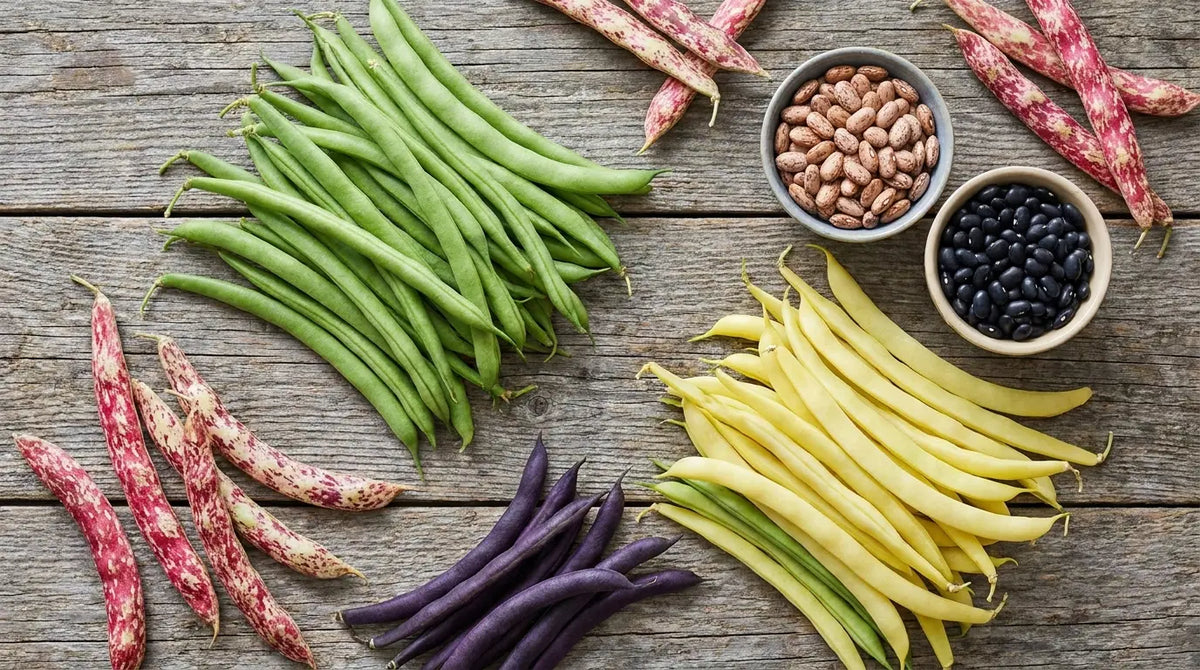
Snap beans — also called green beans or string beans — are picked young, while the pods are crisp and the seeds inside are still tiny, and eaten whole, pod and all. Despite the "green" nickname they also come in yellow, which growers call wax beans (Golden Wax, Cherokee Wax), and in purple. Steam, sauté, or blanch them. Shell beans are left on the plant a step longer, until the seeds swell and fill the pod; you then shell the seeds out and cook them fresh, discarding the now-tough pod. Tongue of Fire (an Italian borlotti), Dragon Tongue, and Cannellini are prized shell beans, wonderful in soups and succotash. Dry beans go all the way: the pods are left to mature and dry right on the plant, then the hard seeds are threshed out and stored. Pinto, Black Turtle, Navy, kidney, Cranberry, and the striking Cherokee Trail of Tears are all dry beans — the cheapest, most storable protein you can grow, and the base of every chili and pot of baked beans.
Two more are worth knowing: lima beans (butter beans, such as Henderson and Fordhook) are shelled and eaten fresh or dried, and runner beans like Scarlet Runner give edible young pods, plump shell beans, and showy red flowers all at once.

Types of beans at a glance
| Type | Also called | What you eat | Days to maturity | Example heirlooms |
|---|---|---|---|---|
| Bush snap | Green / string bean | Whole young pod | 50–60 | Contender, Provider, Tendergreen, Royal Burgundy |
| Pole snap | Climbing / running bean | Whole young pod | 60–70 | Kentucky Wonder, Blue Lake, Rattlesnake, Romano |
| Wax | Yellow snap bean | Whole young pod | 50–60 | Golden Wax, Cherokee Wax |
| Shell | Shelling / horticultural | Fresh-shelled seeds | 65–85 | Tongue of Fire, Dragon Tongue, Cannellini |
| Dry | Soup / field bean | Dried seeds | 85–100 | Pinto, Black Turtle, Cherokee Trail of Tears |
| Lima | Butter bean | Fresh or dried seeds | 65–90 | Henderson, Fordhook 242 |
| Runner | Scarlet runner | Young pods or seeds | 70–90 | Scarlet Runner, Painted Lady |
Growing beans from seed
Whatever type you choose, beans are direct-sown crops — they resent transplanting, so skip the indoor start and sow the seeds right where they will grow. Wait until your last frost has passed and the soil has warmed to at least 60°F, because cold, wet ground rots the seed before it sprouts. Plant one inch deep in full sun, spacing bush beans two to four inches apart and pole beans four to six inches apart at the base of their support. Because beans are legumes, they need little added nitrogen; an inch of water a week and decent drainage is most of the job. Water at the soil line to keep the leaves dry and discourage disease.
Harvest and storage
The reward stage differs by type. Pick snap beans young and often — when the pods are firm and slender, before the seeds bulge — and check every two or three days, because frequent picking is the single best way to keep a plant producing instead of quitting. Refrigerate them for a few days, or blanch and freeze for winter. Harvest shell beans when the pods look full and lumpy but the seeds are still tender. For dry beans, leave the pods on the plant until they turn papery and rattle; if frost threatens first, pull the whole plants and hang them somewhere dry to finish. Thresh out the seeds, let them dry until a bean dents your teeth rather than the reverse, then store them airtight — properly dried beans keep for years.

Which type of bean should you grow?
For a fast, foolproof first crop, start with a bush snap bean such as Contender or Provider — direct-sow the seed after your last frost, keep it watered, and you will be picking in under two months with no staking at all. Want a long harvest, or short on ground space? Send a pole snap like Kentucky Wonder up a trellis. If your goal is beans to store for winter soups and chili, give a dry bean a full, warm season to ripen on the plant. And because every variety here is open-pollinated and non-GMO, you can save seed from your best plants and grow the same beans free next year.
Related guides
- 13 Types of Basil and How to Use Each One in the Kitchen
- Companion Planting Chart: What to Plant Together (Full Vegetable Guide)
- Pumpkin Growing Stages: From Seed to Jack-o'-Lantern
- Types of Cucumbers: Slicing, Pickling & Specialty Varieties Explained
- Types of Melons: 15 Varieties from Cantaloupe to Honeydew
Frequently asked questions
What is the difference between bush beans and pole beans?
Bush beans grow one to two feet tall, need no support, and mature in about 50 to 55 days with one main flush of pods. Pole beans climb six to ten feet up a trellis, start a couple of weeks later, and keep producing for months, giving more beans per square foot.
Are snap beans and green beans the same thing?
Basically yes. “Snap bean” is the category for any bean picked young and eaten pod-and-all, while “green bean” and “string bean” are everyday names for it. Snap beans also come in yellow wax and purple, so not every snap bean is actually green.
What are shell beans, and how are they different from snap beans?
Shell beans are grown until the seeds inside swell up; you shell them out and eat the fresh seeds, discarding the pod. Snap beans are picked earlier and eaten whole, tender pod and all. They are often the same plants, just harvested at a different stage.
Which type of bean is easiest to grow for beginners?
A bush snap bean such as Contender or Provider. Direct-sow the seed straight into warm soil after your last frost, keep it watered, and you will pick beans in under two months, with no trellis, staking, or transplanting required. Beans are a great first crop.
What are the most popular heirloom bean varieties to grow?
For snap beans: Contender and Provider (bush), Kentucky Wonder and Blue Lake (pole). For shelling and drying: Tongue of Fire borlotti, Cherokee Trail of Tears, and Black Turtle. Scarlet Runner is a favorite for its edible pods and bright red flowers.
How do I tell whether a bean is a snap, shell, or dry-bean type?
It comes down to when you harvest, not a different plant. Pick it young with tender pods for a snap bean, let the seeds plump and shell them fresh for a shell bean, or leave the pods to dry fully on the vine for a dry bean. Your seed packet notes the best use.
Can you eat the pods of every type of bean?
No. Only snap beans have tender pods meant to be eaten whole. Shell and dry bean pods turn tough and fibrous, so you eat just the seeds inside. And always cook beans before eating, as raw beans, especially lima and kidney, can upset your stomach.

Contender Bush Bean Seeds – Non-GMO HeirloomBeginner pickHeirloom bush snap bean, ready in about 50 days with no trellis.
Price$4.99
Sale

Vegetable Seeds Variety Pack55 varieties55 non-GMO heirloom varieties including beans, over 11,500 seeds.
Price$21.99Starting at$17.99
Sale

Summer Vegetable Seeds Variety Pack – Non-GMO HeirloomSummer setWarm-season vegetables including beans, in one starter box.
Price$27.99
Sale Price$24.99
Sale

Greens & Vegetable Seeds Variety Pack – Non-GMO Heirloom75 varieties75 greens and vegetable varieties, beans included.
Price$63.99
Sale Price$59.99

- Choosing a selection results in a full page refresh.











 Easy Returns 30-day guarantee