


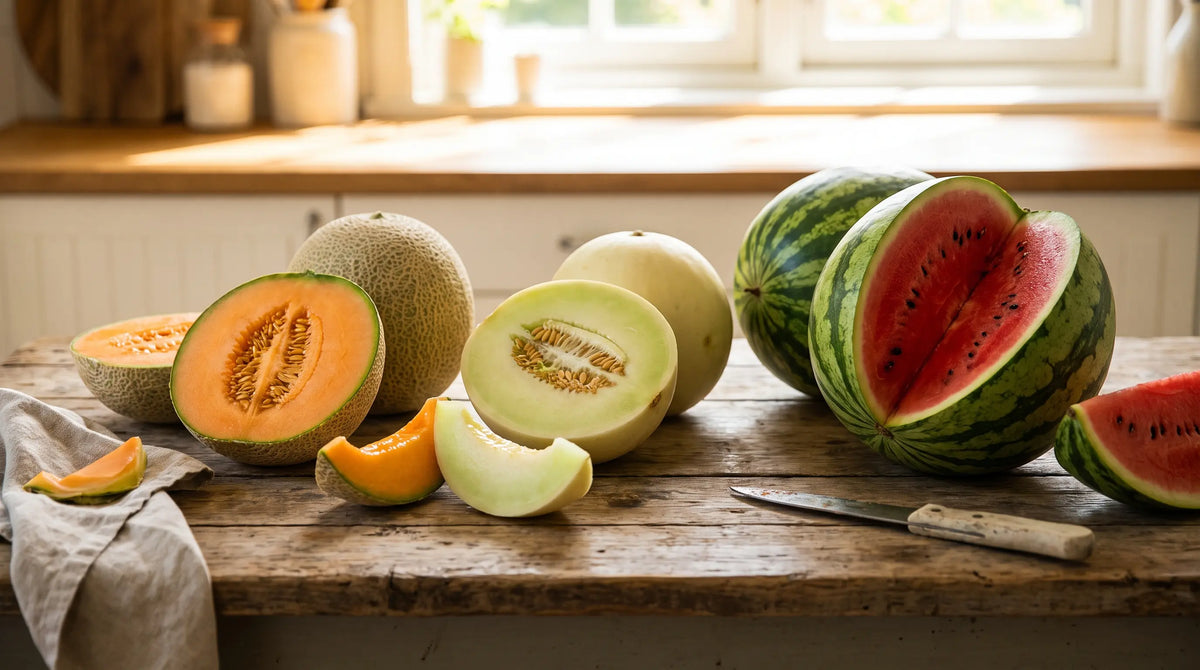
Types of Melons: 15 Varieties from Cantaloupe to Honeydew
Updated October 2026
So many more melons than the two at the store
If your idea of a melon starts and ends with the netted cantaloupe and the pale honeydew stacked by the checkout, you are missing most of the good stuff. The melons that ship well are chosen for shelf life and bruise resistance, not flavor, and they are usually picked underripe so they survive the truck. The best eating melons are the opposite. They are thin skinned, quick to ripen, and so fragile they would never survive distribution. That is exactly why they are worth growing yourself. Here are fifteen types worth knowing, grouped so you can actually keep them straight.

One quick note on names. What most people call a cantaloupe in North America is really a muskmelon, and true European cantaloupes are a slightly different, smoother skinned type. It matters less on your plate than it does in a textbook, so do not lose sleep over it.
The muskmelon crowd (your everyday cantaloupe and friends)
These are the netted, ribbed melons with orange or green flesh and that unmistakable perfume when they are ripe. Their best feature for a home grower is that they tell you when they are done. A ripe muskmelon develops a crack all the way around the stem and slips off with the gentlest push, which growers call the full slip. If you have to tug, wait a day. That single cue takes most of the guesswork out of harvest.
1. Hale's Best
An old heirloom cantaloupe with heavy netting, sweet orange flesh, and a strong aroma. It was selected to ripen a little earlier than most, which makes it one of the safer picks for gardeners in cooler or short season regions who worry about running out of summer before the fruit finishes.
2. Honey Rock
Rounder and less ribbed than a classic cantaloupe, with firm salmon flesh and dependable sweetness. It is an early, vigorous grower that sizes up fast and shrugs off a range of soils, so it is a forgiving choice if this is your first melon season. Its shorter time to maturity also makes it a friend to northern gardeners.
3. Charentais
The French melon people rave about, and with reason. Smooth gray green skin, deep orange flesh, and an intense, honeyed flavor that is hard to beat. The catch is that Charentais barely slips and ripens on a tight window, so you learn to read the smooth skin turning creamy and to sniff the blossom end daily as harvest nears. Miss it and it goes mealy fast, which is the whole reason you grow it at home instead of buying it.
4. Delicious 51
A productive muskmelon with built in tolerance to fusarium wilt, which earns its keep in humid summers where soil diseases and powdery mildew like to move in. Sweet, aromatic, and reliable, it is the kind of workhorse variety you plant when you want a sure thing.
If you want the classic mixed melon patch without committing to a single type, a variety pack is the easy way in. You get a spread of melons and watermelons from one packet and can decide next year which ones earned a second planting. Just label your rows, because once the vines tangle you will not tell them apart until harvest.
Sale

Melon & Watermelon Seeds Variety Pack – Non-GMO HeirloomBest SamplerA mixed pack of melons and watermelons so you can trial several types in one season before picking favorites.
Price$12.99
Sale Price$9.99
The winter melons (honeydew, canary, and the smooth-skinned keepers)
Do not let the name fool you, these are still summer crops. They are called winter melons because the thick, smooth rind lets them store for weeks after harvest instead of days, so they carry fresh melon into the cooler months. They do not slip off the vine, so you judge ripeness differently. Watch for the rind color changing, a slight give at the blossom end, and a faint sweet smell there. When in doubt, cut the stem cleanly with a knife rather than pulling.
5. Honeydew
Pale green to creamy white skin over soft, juicy, pale green flesh. Honeydew is milder and cleaner tasting than cantaloupe, and its sugars come on late, so patience is everything. The common mistake is picking too early while the rind is still hard and green with a whitish bloom. Wait until the skin turns waxy and creamy and the blossom end softens slightly under your thumb. Honeydew wants a long, warm run to finish, so it rewards a head start indoors in cooler climates.

Honeydew Melon Seeds – Non-GMO HeirloomCustomer FavoriteClassic pale green honeydew with soft, juicy flesh and clean, late season sweetness.
Price$4.99
6. Canary
Bright, almost neon yellow skin shaped like a football, with pale flesh that tastes like a milder, slightly tangy honeydew. It is one of the prettiest melons you can grow and a genuine conversation piece at the table. The flesh stays firm and keeps well once cut, and the whole fruit stores for weeks, so it is as practical as it is showy.

Canary Yellow Melon Seeds – Non-GMO HeirloomEye-CatcherBright yellow, football shaped melon with firm white flesh that keeps well once cut.
Price$4.99
7. Casaba
Wrinkled, golden, roughly heart shaped, with pale flesh and a gentle, cucumber clean sweetness. Casaba has almost no aroma, so you cannot smell your way to ripeness. Go by the deep yellow rind and a softening tip instead. What it lacks in perfume it makes up in storage life, keeping for weeks in a cool spot.
8. Crenshaw
Green gold skin over salmon flesh that is rich, juicy, and a little spicy. It gets large and heavy, so give the vines plenty of room and expect a serious payoff from each fruit. Ripe Crenshaw softens noticeably at the stem end and picks up a sweet fragrance, so unlike casaba it will give you a scent to work with.
9. Piel de Sapo
The name means toad skin, which describes the mottled green rind perfectly. Underneath is crisp, sweet, pale flesh that keeps for a remarkably long time, which is why Spanish families store it into the cooler months. It holds so well that it will often finish ripening off the vine on a counter, so you can harvest slightly ahead and let it come into full sweetness indoors.
The specialty and heirloom melons worth hunting down
This is where growing your own really pays off, because you will almost never find these on a shelf.
10. Galia
Netted skin like a cantaloupe but fragrant green flesh inside. It splits the difference between muskmelon aroma and honeydew flavor, and it gives you a clear visual cue. The netted rind shifts from green to gold as it ripens, so you can watch it change and time the harvest by eye.
11. Ananas
An aromatic heirloom with white flesh and a flavor many people compare to pineapple, which is where the name comes from. Soft, perfumed, and highly perishable, so eat it within a day or two of picking. This is a melon that simply does not exist in the store, which is the whole point of growing it.
12. Sprite
A small, ivory skinned melon with crisp, almost pear like white flesh that is remarkably sweet. Because the fruits are compact and the plants are less rampant, it suits smaller gardens and containers better than the sprawling giants. Each vine sets a good number of fruit, so a couple of plants keep you in snacking melons.
13. Banana Melon
A long, curved, yellow heirloom that looks nothing like a melon until you cut it open to salmon flesh with a spicy, old fashioned aroma. It can stretch well past a foot long. It is a fun one to grow just to watch people's faces, and the flavor is a genuine window into the melons gardeners grew generations ago.
The watermelon corner
Watermelons sit apart from the true melons above, but no melon roundup feels complete without them. They want the same heat and even water, just more room to run and a longer warm season to finish sweet.
14. Crimson Sweet
The gold standard for home gardens. Striped green rind, deep red flesh, high sugar, and good tolerance to fusarium and anthracnose. It sizes up to a proper picnic melon and holds well in the field. To call it, watch three things together. The curly tendril nearest the fruit browning and drying, a dull thud when you thump it, and the ground spot where it rests on the soil turning from white to creamy yellow. No single cue is enough on its own.
15. Sugar Baby
A compact icebox watermelon that ripens quickly and fits smaller plots, producing round, dark rinded fruit in the six to ten pound range. The quick maturity makes it a good bet where summers are short, and its manageable size means it will not take over the whole bed the way a full Crimson Sweet vine can.
A quick side-by-side
| Melon | Flesh | Best for |
|---|---|---|
| Hale's Best | Orange | Cooler, shorter seasons |
| Charentais | Deep orange | Best flavor at home |
| Honeydew | Pale green | Mild, late season sweetness |
| Canary | White | Color and storage |
| Piel de Sapo | Pale | Long keeping |
| Crimson Sweet | Red | Classic picnic watermelon |
| Sugar Baby | Red | Small gardens |
Growing any of them, in short
Melons love heat, full sun, and steady moisture while the fruit sizes up. The biggest mistake is sowing too early. Melons sulk and stall in cold ground, so wait until soil is at least 65 to 70 degrees Fahrenheit, or start seed indoors two to three weeks ahead and transplant carefully, since they hate root disturbance. Give each plant room to run, feed the bed with compost, and water deeply and evenly through fruit set. Then, as the fruits approach ripeness, ease off the water. Letting them run a touch dry in that final stretch concentrates the sugars and is the single biggest lever you have over flavor. Overwater at the finish and you get big, watery, bland melons.
Related guides
- 13 Types of Basil and How to Use Each One in the Kitchen
- Companion Planting Chart: What to Plant Together (Full Vegetable Guide)
- Pumpkin Growing Stages: From Seed to Jack-o'-Lantern
- Types of Beans: A Complete Guide to Bush, Pole, Snap & Shell Varieties
- Types of Cucumbers: Slicing, Pickling & Specialty Varieties Explained
Frequently asked questions
What is the difference between a cantaloupe and a muskmelon?
In North America, most melons sold as cantaloupe are really netted muskmelons. True European cantaloupes have smoother, lightly ribbed rinds with little to no netting. On the plate the difference is minor, so grow whichever aroma and flavor you like best and skip the label.
How do I know when a melon is ripe?
Muskmelons crack around the stem and slip off with a gentle push, and they smell sweet at the blossom end. Honeydew, canary, and casaba do not slip, so watch for the rind changing color, a slight softening, and a faint sweet scent. For watermelon, look for the tendril drying brown and a dull thump.
Which melon is easiest for a beginner to grow?
Honey Rock and Hale's Best are forgiving, early muskmelons that size up fast and tolerate a range of soils. For watermelon, Crimson Sweet is reliable and Sugar Baby suits smaller spaces and shorter summers. Give any of them heat, full sun, and steady water through fruit set.
Are these melon seeds non-GMO?
Yes. The melon and watermelon seeds here are non-GMO, heirloom, open-pollinated varieties. That means you can save seed from a well isolated plant and grow the same melon again next year. Just note that melons cross readily nearby, so keep varieties apart or hand-pollinate for true seed.
Can I grow melons in a small garden or containers?
You can with the compact types. Sugar Baby watermelon and small melons like Sprite need far less room than sprawling Crenshaw or Crimson Sweet vines. Use a large container of at least ten gallons, train lighter fruits up a sturdy trellis with slings, and keep water and feeding consistent.

- Choosing a selection results in a full page refresh.











 Easy Returns 30-day guarantee