


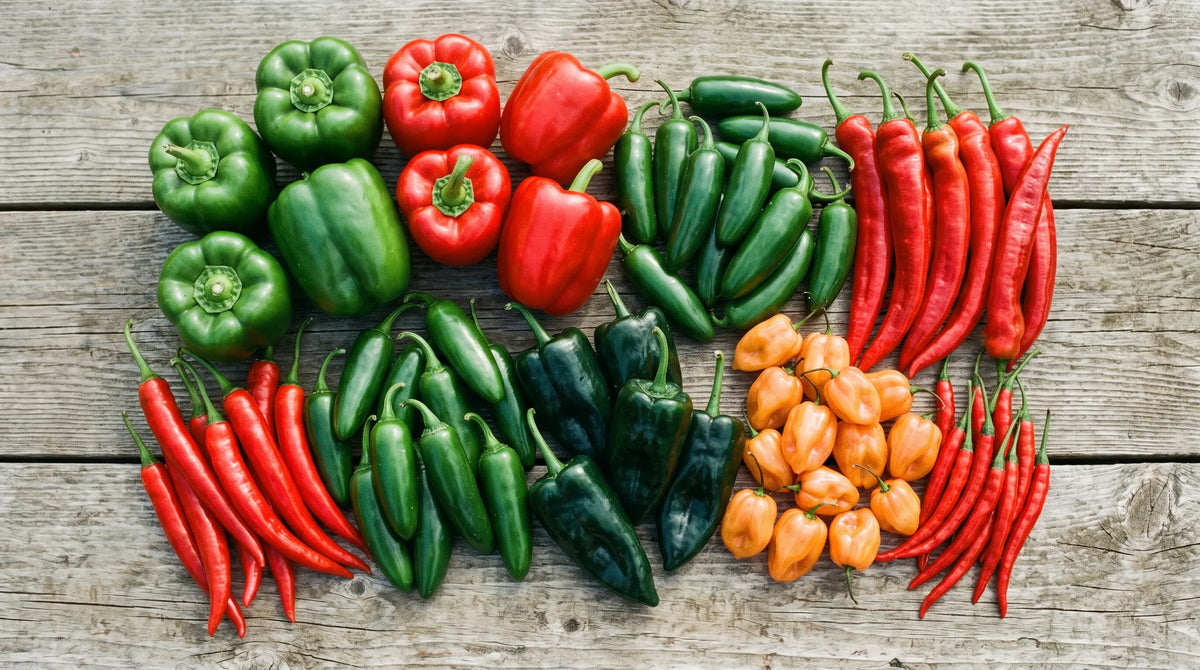
Types of Peppers: The Complete Chart from Sweet Bells to Superhots
Updated October 2026
Peppers might be the most rewarding crop you can grow, and they are easily one of the most varied. The same plant family gives you a sweet bell you can eat like an apple and a Carolina Reaper you cut with gloves on. What separates them all is heat, and once you know roughly how hot a pepper gets, you can match it to the way you cook and the length of your season. Here are the popular types from sweetest to hottest, with a chart to compare them at a glance.
What the Scoville scale tells you
The heat in a pepper comes from capsaicin, a compound packed into the pale ribs inside the pod and the seeds attached to them. The Scoville scale puts a number on it. A sweet bell sits at zero. A jalapeno lands in the low thousands. A habanero runs into the hundreds of thousands, and the superhots climb past a million. Treat every figure as a range rather than a fixed point, because the same variety turns hotter in a dry, stressful summer and milder in a cool, wet one. For planning a garden, a ballpark is all you need.
| Heat level | Scoville (SHU) | Popular varieties | Best for |
|---|---|---|---|
| Sweet | 0 | California Wonder, Cubanelle, pimento, sweet banana | Fresh, roasted, stuffed |
| Mild | 500 to 2,500 | Anaheim, poblano, Hungarian sweet | Roasting, green chile, rellenos |
| Medium | 2,500 to 8,000 | Jalapeno, Fresno | Salsa, pickling, chipotle |
| Hot | 10,000 to 100,000 | Serrano, cayenne, Thai | Hot sauce, drying |
| Very hot | 100,000 to 350,000 | Habanero, Scotch bonnet | Jerk, fruity hot sauce |
| Superhot | 1,000,000 and up | Ghost pepper, Carolina Reaper | Extreme sauce, a challenge |

Sweet peppers (0 SHU)
Sweet peppers carry almost no capsaicin, so what you taste is the fruit itself: crisp, grassy, and genuinely sweet once it ripens. Bell peppers lead the group, and California Wonder is the one most gardeners start with. It is a thick, blocky pepper that ripens from green to red and grows sweeter the longer you leave it on the plant. Colored bells in yellow, orange, and purple do the same. Past the bells you will find thin-walled frying peppers like Cubanelle and the round, mellow pimento. All of them are good raw, roasted, or stuffed.

California Wonder Pepper Seeds – Non-GMO HeirloomSweet - 0 SHUThe classic blocky bell that ripens green to red - thick-walled, crisp, and sweet raw, roasted, or stuffed.
Price$4.99
Mild peppers (500 to 2,500 SHU)
This band is warmth without a real burn, the one to reach for when you want pepper flavor and only a tingle. Anaheim is the everyday mild chile for roasting and green chile sauce. Poblano is the dark, rich pepper behind chiles rellenos, and once it dries it becomes ancho. These are the backbone of a lot of Southwestern and Mexican cooking, and they are easygoing in the garden.
Medium peppers (2,500 to 8,000 SHU)
For most home cooks, this is where heat really starts. The jalapeno is the reference point for the whole scale: bright, grassy, and useful in almost anything, whether you eat it fresh, pickle it, or smoke it into chipotle. Fresno looks a lot like it but ripens red and tastes a little fruitier. If you grow just one hot pepper, make it a jalapeno. It crops heavily and finds its way into nearly every meal.
Sale

Jalapeno Pepper Seeds – Non-GMO HeirloomMedium - 2,500-8,000 SHUThe everyday hot pepper and the scale's reference point - bright and grassy fresh, pickled, or smoked into chipotle.
Price$4.99Starting at$3.99
Hot peppers (10,000 to 100,000 SHU)
Now the burn lingers. Serrano is the sharper, smaller cousin of the jalapeno, and the one to chop into fresh salsa. Cayenne is the long, thin red chile that dries and grinds into the powder already in your spice rack, and it forms the base of countless hot sauces. Go with a light hand at first, since heat in this band swings a good deal with the weather and the plant.
Very hot and superhot peppers (100,000 SHU and up)
At the top of the scale, capsaicin stops being a seasoning and becomes the whole point. The habanero and its close relative the Scotch bonnet bring intense, fruity heat, and they are the hottest peppers most gardeners will ever actually cook with. Above them sit the true superhots. The ghost pepper reaches around a million SHU, and the Carolina Reaper averages well over 1.5 million with peaks past two million. Grow these for the challenge and for hot sauce, keep them away from children, and wear gloves when you cut them.

Habanero Pepper Seeds – Non-GMO HeirloomVery hot - to 350,000 SHUIntense, fruity heat for jerk and fiery sauces - the hottest single packet in our pepper range.
Price$4.99
Why the same pepper can taste hotter
Two peppers off one plant can land in different places on the scale, which is why every number here is a range. Stress is the main reason. A plant grown hot and dry, with less water, concentrates more capsaicin, so a jalapeno can read mild in one summer and sharp in the next. Ripeness plays a part too, since peppers usually grow both sweeter and hotter as they turn from green to their final color. And because most of the heat lives in the ribs and seeds, cutting those out before you cook takes a lot of the bite away.
Growing peppers from seed
Nearly every pepper on this list grows the same way. Start seeds indoors about 8 to 10 weeks before your last frost. They germinate best in warm soil, around 75 to 85F, and can take one to three weeks to come up, with the superhots the slowest of the bunch. Wait to transplant until nights hold above 50F, then give each plant full sun, steady water, and 18 to 24 inches of room. Sweet and mild types are usually ready 60 to 80 days after transplanting, hot types a bit later, and superhots often need 100 days or more, so start those early if your summer is short.
Making your harvest last
Part of why peppers earn their space is how well they keep. Sweet, thick-walled types hold a week or two in the refrigerator and freeze nicely once chopped, with no blanching needed. Thin-walled hot peppers are made for drying: string them up somewhere warm and airy, or run them through a dehydrator, then grind them into flakes or powder. Cayenne and most thin reds dry in just a few days. Label the hot ones clearly, because a spoonful of homemade superhot powder is a lot stronger than the jar from the store.
Choosing what to grow
If peppers are new to you, plant across the range: a dependable sweet bell, a jalapeno for everyday heat, and one hot variety to stretch your palate. A mixed variety pack is the easiest way to try several heat levels from a single packet and learn which ones earn a permanent place in your garden.
Related guides
- 13 Types of Basil and How to Use Each One in the Kitchen
- Companion Planting Chart: What to Plant Together (Full Vegetable Guide)
- Pumpkin Growing Stages: From Seed to Jack-o'-Lantern
- Types of Beans: A Complete Guide to Bush, Pole, Snap & Shell Varieties
- Types of Cucumbers: Slicing, Pickling & Specialty Varieties Explained
Frequently asked questions
What are the main types of peppers?
Peppers are usually grouped by heat: sweet types like bell, Cubanelle and pimento sit at 0 to 500 SHU, then mild (Anaheim, poblano), medium (jalapeno, Fresno), hot (serrano, cayenne), very hot (habanero), and superhots like the Carolina Reaper topping two million SHU.
What is the Scoville scale?
The Scoville scale measures a pepper's heat in Scoville Heat Units (SHU), based on its capsaicin content. Sweet bells register 0 SHU, jalapenos sit around 2,500 to 8,000, habaneros reach the hundreds of thousands, and superhots climb past a million.
What is the hottest type of pepper?
The Carolina Reaper is widely recognized as one of the hottest peppers, averaging over 1.6 million SHU with peaks above two million. Other superhots like the ghost pepper (Bhut Jolokia) and Trinidad Scorpion sit just below it on the scale.
Which peppers are easiest for beginners to grow?
Bell peppers such as California Wonder and dependable hot varieties like jalapeno are the easiest from seed. Both germinate readily in warm soil, crop heavily, and ripen in 60 to 90 days, making them forgiving choices for a first pepper garden.
How do you make a pepper less spicy?
Most of a pepper's capsaicin sits in the pale inner ribs and the seeds touching them, not the flesh. Removing those membranes before cooking noticeably tames the heat, letting you enjoy a chile's flavor with much less burn.

- Choosing a selection results in a full page refresh.









 Easy Returns 30-day guarantee