


Types of Squash: Summer and Winter Varieties Explained (With Chart)
Updated August 2026
Squash is one of the most generous crops in a summer garden, but the word covers two very different vegetables. Summer squash and winter squash are not about the season you plant them, since both go in after your last frost and both need warm weather to thrive. The real difference is when you pick the fruit. Get that one idea straight and choosing what to grow gets a lot simpler.
Summer squash and winter squash: the real difference
It comes down to the harvest stage. Summer squash is picked young, just days after the flower drops, while the skin is still thin, the seeds are soft, and the flesh is full of moisture. That is why a zucchini is tender enough to eat raw and why it only keeps a week or so in the fridge. Winter squash is left on the vine until it is fully mature, which takes far longer. The rind hardens into a shell, the seeds fill out, and the flesh turns dense and sweet as it stores up starch. Cure it for a couple of weeks and a butternut will keep for months, which is how these squash once filled root cellars through winter. The names describe storage, not the growing calendar.

Summer squash to grow
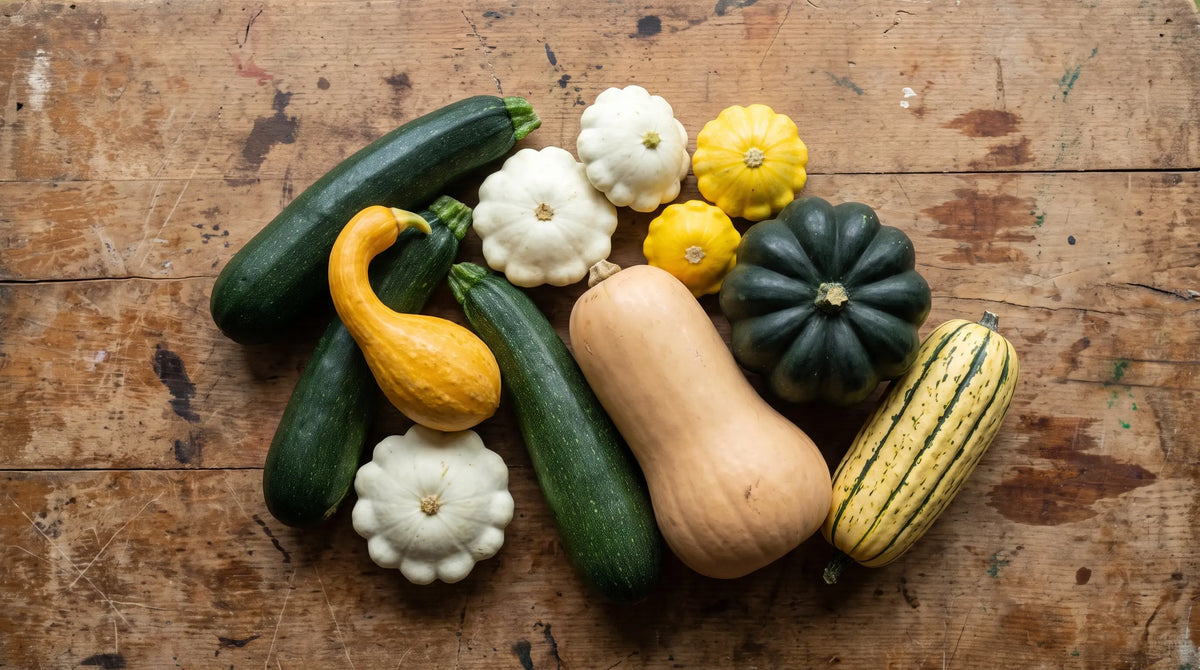
Summer squash rewards you for picking often. The more you cut, the more the plant makes, so check it daily once it hits its stride. Zucchini is the classic, best harvested at about 6 to 8 inches before the seeds toughen. Yellow crookneck has a curved neck and bumpy golden skin and tastes best while it is still small. Pattypan, the little scalloped saucer shape, is most tender at 2 to 4 inches across. All of these mature fast, usually in 45 to 60 days, and a single healthy plant can feed a whole household.
Sale

Black Beauty Zucchini Seeds – Non-GMO HeirloomSummer stapleThe classic dark-green zucchini — pick at 6 to 8 inches for tender, glossy fruit all summer long.
Price$4.99Starting at$3.99
Sale

Summer Yellow Squash Seeds (Golden Crookneck) – Non-GMO HeirloomHeirloom favoriteCurved-neck yellow summer squash; harvest small at 4 to 6 inches for the sweetest, most tender texture.
Price$4.99Starting at$3.99
Because summer squash can go from perfect to overgrown in a couple of warm days, keep up with it. If one gets away from you, it is still fine to eat, just seedier and better grated into bread or fritters.
Winter squash to grow
Winter squash needs a longer run, usually 80 to 110 days, and more room to sprawl. Butternut is the one to start with: tan skin, a thick neck of solid flesh, and some of the best storage life of any squash. Acorn is small, ribbed, and quick to cook, though it does not keep as long. Spaghetti squash pulls apart into pasta-like strands when you bake it. Delicata has skin thin enough to eat, which also means it stores for weeks rather than months. As a rough guide, butternut holds two to three months or more, acorn and spaghetti closer to one or two, and delicata about a month.

Butternut Squash Seeds – Non-GMO HeirloomBest for storageTan-skinned winter keeper with dense, sweet flesh — cures and stores for two to three months or more.
Price$4.99
Harvest winter squash once the rind is hard enough that your thumbnail will not dent it and the stem has started to dry. Leave a couple of inches of stem on, cure the fruit somewhere warm and dry, then store it in a single layer off the ground.
Squash at a glance
Days to maturity are rough ranges that shift with the variety and your weather. Summer figures count to the young, edible stage. Winter figures count to full maturity.
| Group | Variety | Days to maturity | Pick at / how long it keeps |
|---|---|---|---|
| Summer | Zucchini | 45 to 55 | Pick at 6 to 8 in; keeps 1 to 2 weeks |
| Summer | Yellow crookneck | 45 to 55 | Pick at 4 to 6 in; keeps 1 to 2 weeks |
| Summer | Pattypan (scallop) | 50 to 60 | Pick at 2 to 4 in; keeps 1 to 2 weeks |
| Winter | Acorn | 75 to 90 | Full maturity; keeps 1 to 2 months |
| Winter | Butternut | 85 to 110 | Full maturity; keeps 2 to 3 plus months |
| Winter | Spaghetti | 85 to 100 | Full maturity; keeps 1 to 2 months |
| Winter | Delicata | 80 to 100 | Full maturity; keeps about 1 month |
How to grow any squash
All squash want the same things: full sun, warm soil of at least 60F, and steady water. Sow the seeds straight into the garden once frost is past, or start them indoors a few weeks early if your season is short. They lean on bees to set fruit, so go easy on any sprays near the open blossoms. Watch for squash bugs, vine borers, and powdery mildew, and give the plants room to breathe, roughly 2 to 3 feet apart for bush types and 3 to 4 feet or more for the vining kinds.
Which should you grow?
If you want a steady haul of fresh vegetables all summer with almost no fuss, plant summer squash. If you want food that carries you into fall and winter, grow a few winter squash and give them the space and the season they need. Plenty of gardeners do both: a fast zucchini or crookneck for the kitchen now, and a couple of butternuts for the pantry later.
Related guides
Frequently asked questions
What is the difference between summer and winter squash?
Summer squash is harvested young with thin, edible skin and soft seeds, and keeps only a week or two fresh. Winter squash is left to fully mature, forming a hard rind and dense flesh that, once cured, stores for weeks to months.
Is zucchini a summer or winter squash?
Zucchini is a summer squash. It is picked immature at about 6 to 8 inches while the skin is thin and edible and the seeds are still soft. Like other summer squash it bruises easily and is best eaten fresh within a week or two of harvest.
How long does winter squash take to grow?
Most winter squash needs roughly 80 to 110 days from planting to full maturity, longer than summer squash. Butternut often runs 85 to 110 days, while acorn, spaghetti, and delicata usually mature in about 80 to 100 days by cultivar and climate.
Which squash stores the longest?
Hard-shelled winter squash stores best. Butternut typically keeps two to three months or more, spaghetti and acorn about one to two months, and thin-skinned delicata closer to one month. Cure them first, then store cool and dry near 50 to 55 degrees F.
Can you eat the skin of squash?
On summer squash like zucchini, crookneck, and pattypan the thin skin is fully edible when picked young. Most winter squash has a hard rind you peel off, but delicata is a notable exception with skin tender enough to roast and eat.

- Choosing a selection results in a full page refresh.










 Easy Returns 30-day guarantee