


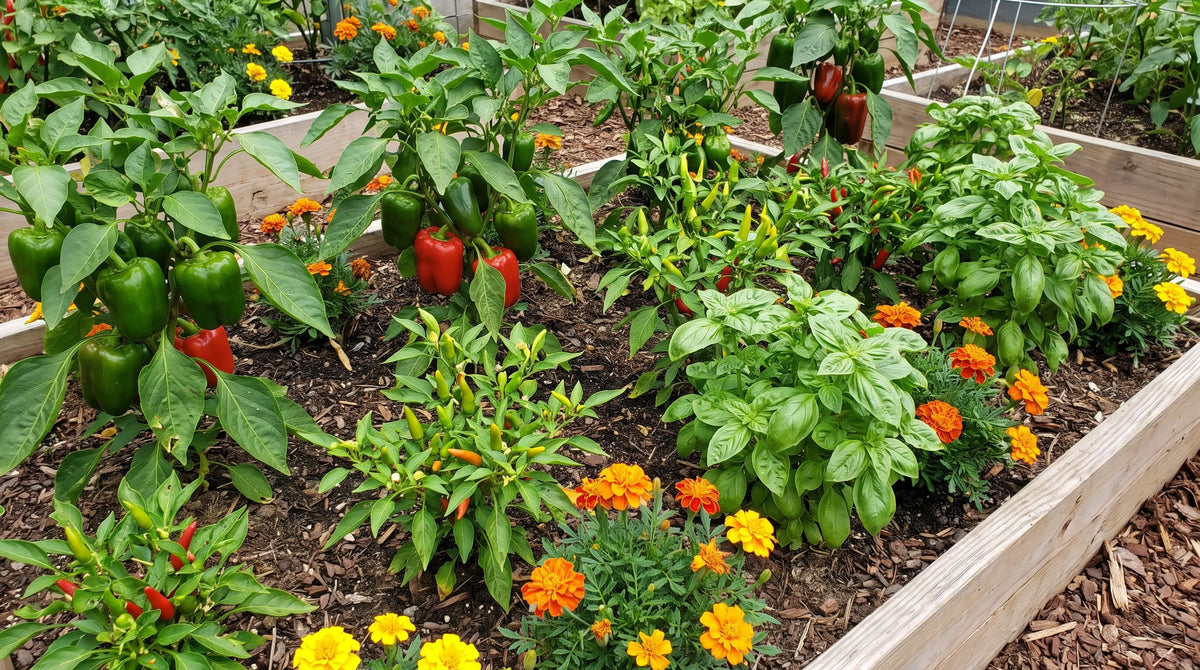
Pepper Companion Plants: What to Grow & Avoid
Updated August 2026
The best companion plants for peppers are basil, alliums like onions and chives, carrots, marigolds, nasturtiums, and borage. These pepper companion plants deter aphids, thrips, and spider mites, pull in pollinators, shade the soil, and share the same warm, sunny conditions peppers crave. Just as important is what to keep away: fennel, heavy-feeding brassicas like cabbage and broccoli, and a little breathing room from sprawling beans.
For the bigger picture, see our full companion planting chart, or browse the types of peppers worth growing.
Plant peppers with: basil, onions and chives, carrots, marigolds, nasturtiums, borage, spinach and lettuce, and tomatoes (with space between them).
Keep peppers away from: fennel, brassicas (cabbage, broccoli, kale), and crowding beans.
The best companion plants for peppers
Good companion plants for peppers earn their spot by doing real work: repelling the pests that target peppers, feeding pollinators, or covering bare soil. Here are the companions worth planting, and exactly why each one helps.
Basil
Basil is the classic partner for peppers, and for good reason. Its strong aromatic oils help repel aphids, thrips, and spider mites, the three pests most likely to trouble a pepper plant, and many gardeners find peppers grow a little more vigorously alongside it. Basil and peppers also love the same heat and steady moisture, so they thrive in the same bed. If you grow only one companion, make it basil.
Onions and chives
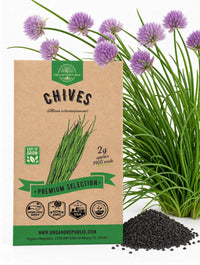
Alliums like onions and chives carry a sharp scent that aphids and many soft-bodied pests would rather avoid, so tucking them around your peppers builds a quiet line of defense. They take up little room, slot neatly between plants, and chives come back on their own year after year. This is the same allium trick that makes them such reliable partners elsewhere, which you can read more about in our onion companion plants guide.
Carrots
Carrots make a smart living mulch under peppers. Their feathery tops shade the soil and hold in moisture, while their roots work down through the bed and help keep it loose and open. Because carrots feed lightly and grow below the soil line, they never compete with peppers for the sun and space up top. Sow them around the base of young pepper plants and let them fill in the ground layer.
Marigolds
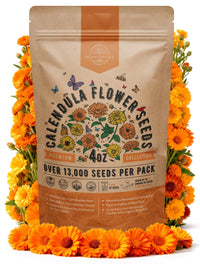
Few flowers work as hard as marigolds. Their roots release compounds that deter root-knot nematodes in the soil, and their bright blooms and pungent foliage help distract or repel aphids and other pests above ground. A ring of marigolds around a pepper bed looks beautiful and pulls double duty as pest control, which is why they belong in almost every vegetable garden.
Nasturtiums
Nasturtiums are the ultimate trap crop. Aphids find them irresistible and will swarm the nasturtiums instead of your peppers, pulling the pressure off the plants you actually want to harvest. Their sprawling habit also shades the soil, and the flowers draw in pollinators and beneficial insects. Plant them at the edges of the bed where they can sprawl freely.
Borage
Borage is a pollinator magnet. Its nonstop blue star-shaped flowers bring in bees and hoverflies, and more pollinator visits usually means better fruit set on your peppers. Borage is also thought to help deter certain pests and its deep roots draw up nutrients, making it a genuinely useful neighbor. Give it a corner of the bed and let the bees do the rest.
Spinach and lettuce
Low, leafy greens like spinach and lettuce make excellent ground cover between pepper plants. They shade the roots, hold moisture in the soil, and crowd out weeds, all while giving you an early harvest before the peppers size up and take over the space. Since they prefer cooler conditions, tuck them in early and let the peppers shade them as the season warms.
Tomatoes
Tomatoes and peppers are close cousins with nearly identical needs for sun, warmth, and feeding, which makes them easy to grow side by side. The one caution is airflow: both can attract similar pests and diseases, so give them enough space between rows to keep leaves dry and air moving. For the full picture on pairing tomatoes well, see our tomato companion plants guide.
What not to plant near peppers
Knowing what to plant with peppers is only half the job. A few neighbors quietly work against them, so keep these out of the pepper bed.
Fennel
Fennel is the one plant almost every gardener agrees to keep away from peppers. It is allelopathic, meaning it releases compounds that can inhibit the growth of nearby plants, and peppers are among the crops it holds back. Give fennel its own spot at the far end of the garden.
Brassicas (cabbage, broccoli, kale)
Brassicas are heavy feeders that pull the same nutrients peppers need and cast dense shade as they mature. Grown too close, they starve and shade young peppers, and the two families also prefer different soil and temperature ranges. Keep them in separate beds.
Crowding beans
Beans are not true enemies of peppers, but pole beans and vigorous bush beans can compete for space and cast shade over shorter pepper plants as they climb and sprawl. If you want beans nearby, give the peppers a little distance so they keep their sun. A row or two of space is usually enough.
Why companion planting works for peppers
Companion planting for peppers works because it rebuilds the diversity that a single-crop bed is missing. Aromatic herbs like basil and alliums confuse and repel the pests that hunt peppers by scent. Flowers like borage and nasturtiums bring in pollinators and beneficial insects, so more flowers turn into fruit and predators keep aphid numbers down. Ground-covering greens and carrots shade bare soil, hold moisture, and keep weeds from stealing water and nutrients. Put together, these companions mean fewer pests, better pollination, and healthier plants without leaning on sprays. It is the same strategy that makes classic pairings work across the garden, from cucumbers to peppers.
How to lay out and use pepper companions
Start by giving peppers themselves the right spacing, usually 18 to 24 inches apart, so air moves freely and disease has a harder time taking hold. Ring the outside of the bed with marigolds and let nasturtiums sprawl at the edges as a trap crop. Tuck basil and chives in the gaps between pepper plants where their scent can do the most good, and sow carrots and low greens like spinach or lettuce as a living mulch across the open soil below. Slip a few borage plants into the corners for pollinators. Time the cool-season greens to go in early so they finish before summer heat, and keep fennel and brassicas in their own beds well away from the peppers. When you are ready to plant, you can shop every variety we grow in our pepper seeds collection, and follow our full guide to growing peppers for sowing and care from seed to harvest.
The best companion plants
Sale

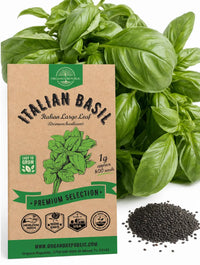
Sweet Basil Seeds – Italian Large Leaf, Non-GMO HeirloomBest pairingBasil's aromatic oils help repel aphids, thrips, and spider mites, the top pepper pests. The classic pepper partner.
Price$4.99Starting at$3.99
Sale

Onion Seeds Variety Pack – Non-GMO HeirloomThe sharp allium scent of onions keeps aphids and soft-bodied pests away from your pepper plants.
Price$12.99
Sale Price$9.99
Sale

Imperator 58 Carrot Seeds – Non-GMO HeirloomHeirloom, non-GMOCarrots work as a living mulch, shading the soil, holding moisture, and loosening the bed below your peppers.
Price$5.99
Sale Price$4.99
Sale

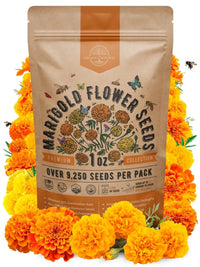
Marigold Seeds PackPest controlMarigold roots deter root-knot nematodes while the blooms repel aphids and other pests above ground.
Price$12.99Starting at$8.99
Sale

Nasturtium Seeds for Sale – Non-GMO HeirloomHeirloom, non-GMOThe ultimate trap crop: aphids swarm nasturtiums instead of your peppers, and the flowers draw in pollinators.
Price$14.99Starting at$6.99
Sale

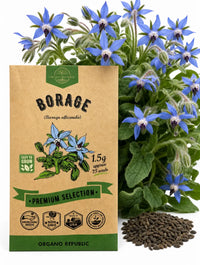
Borage Seeds – Non-GMO HeirloomHeirloom, non-GMOA pollinator magnet whose blue blooms bring in bees and hoverflies for better fruit set on your peppers.
Price$5.99Starting at$4.99
Frequently asked questions
What should you not plant near peppers?
Keep peppers away from fennel, which is allelopathic and can stunt their growth, and from heavy-feeding brassicas like cabbage, broccoli, and kale that compete for the same nutrients and cast dense shade. It is also best to give sprawling beans a little distance so they do not crowd or shade your pepper plants.
Can I plant peppers and tomatoes together?
Yes. Peppers and tomatoes are close relatives with nearly identical needs for sun, warmth, and feeding, so they grow well side by side. The main thing is airflow: because they can share similar pests and diseases, give them enough space between rows to keep the leaves dry and air moving.
Do peppers need companion plants?
Peppers do not strictly need companions, but the right neighbors make a real difference. Aromatic herbs and alliums repel pests, flowers like borage and nasturtiums bring in pollinators and beneficial insects, and low greens or carrots shade the soil and hold moisture. Together they mean fewer pests, better pollination, and healthier plants.
What is the best companion plant for peppers?
Basil is widely considered the best companion plant for peppers. Its strong aromatic oils help repel aphids, thrips, and spider mites, and the two plants share the same love of heat and steady moisture, so they thrive together. If you grow only one pepper companion, make it basil.
Can peppers and basil grow together?
Absolutely. Peppers and basil are a classic pairing because they enjoy the same warm, sunny, evenly moist conditions, and basil's scent helps deter the pests that trouble peppers most. Tuck basil into the gaps between pepper plants where its aroma can do the most good.

- Choosing a selection results in a full page refresh.









 Easy Returns 30-day guarantee