


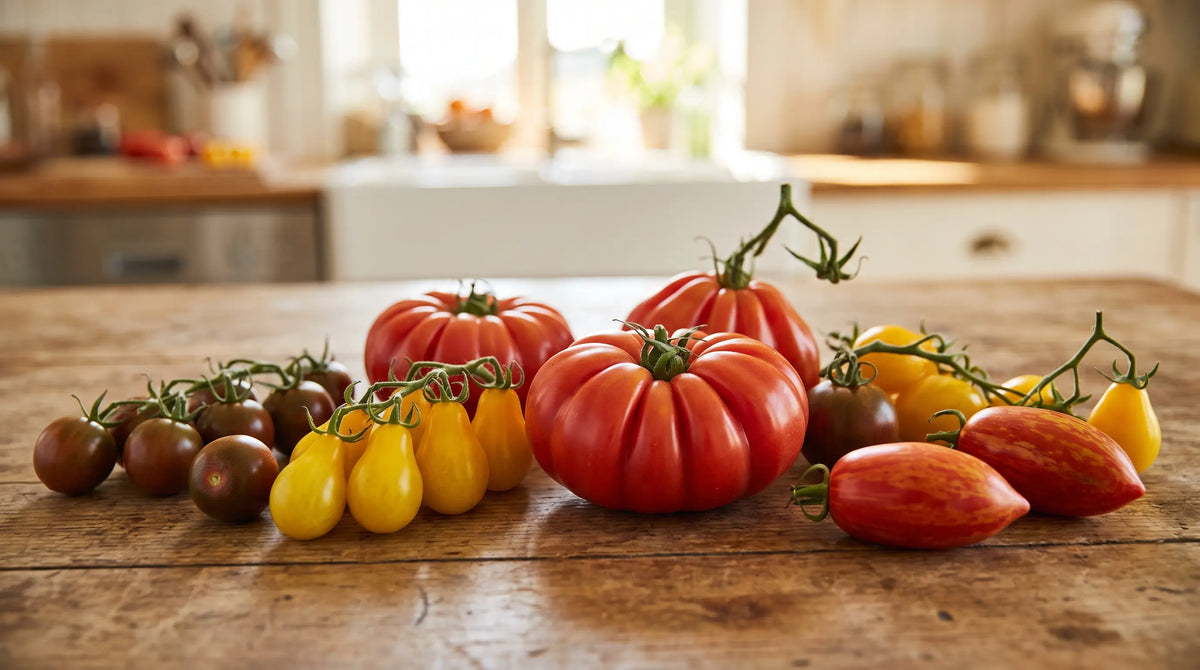
Types of Tomatoes: Slicing, Cherry, Paste and Heirloom Varieties Explained
Updated October 2026
Standing in front of a rack of tomato seed packets can feel like a lot. One says beefsteak, another says cherry, a third says paste, and somewhere in there is a word like determinate that nobody bothered to explain. The good news is that tomatoes sort into a handful of clear groups, and once you know what each group is actually for, choosing gets easy. Here is how the main types break down and which one fits the way you really cook and garden.
The two words that change everything: determinate and indeterminate
Before you think about flavor or color, know how the plant grows, because that decides your spacing, your support, and how your harvest lands. Determinate tomatoes set a flower cluster at the tip of each stem, so the plant tops out around 3 to 4 feet, sets most of its fruit in a two to three week window, then winds down. That concentrated set is exactly why they suit containers, short-season gardens, and anyone who wants a wall of ripe fruit to can in one weekend. Indeterminate tomatoes never form that terminal cluster, so the main stem keeps extending and flowering right up until frost, which is why they climb to 6 feet and beyond and reward you with a steady trickle all season.

Neither one is better, and the choice is about your situation, not quality. Here is the mistake I see most: gardeners heavily prune and sucker a determinate plant the way you would an indeterminate one. Don't. Pinching out the growing tips on a determinate cuts into the very fruit you were trying to grow, since that plant only has so many flower clusters in it. On indeterminates, pruning suckers to one or two main stems improves airflow and fruit size. Check the packet for that determinate or indeterminate line first, because it tells you more about how the plant will behave than the variety name does.
Slicing tomatoes: the sandwich and salad workhorses
Slicing tomatoes are the medium to large round fruits you cut into thick rounds for burgers, sandwiches, and a plate of summer tomatoes with a little flaky salt. They are juicy and balanced, with enough wall structure to hold a clean slice instead of collapsing. This is the tomato most people picture when they just say the word.
The heavyweight of the group is the beefsteak, with dense, meaty flesh and small seed cavities that give you that rich, old-fashioned flavor. They are almost always indeterminate, so give them a sturdy cage or a stake you have driven a good foot into the ground, because a fruit-loaded beefsteak plant gets heavy and top-heavy fast. Two tips from years of growing them: pick beefsteaks when the shoulders still show a touch of color and let them finish ripening on the counter, which spares them from cracking after a rain, and expect the first ripe fruit to take its time. A big beefsteak pours its early energy into vine and roots before it ever hands you a tomato.
Sale

Beefsteak Tomato Seeds – Red, Non-GMO HeirloomBest SlicerBig, meaty slices that cover a whole sandwich. The classic indeterminate slicer for fresh summer eating. Give it a strong stake and pick as the shoulders color up.
Price$4.99Starting at$3.99
Cherry tomatoes: fast, forgiving, and endlessly snackable
If you are new to growing or gardening with kids, cherry tomatoes are the friendliest place to start. The plants are vigorous, they set fruit early, and they shrug off the stress and uneven watering that would crack a bigger tomato. They keep pumping out handfuls of sweet fruit long after the big types have quit. Toss them whole into salads, roast them until they burst and go jammy, or eat them warm off the vine.
Sizes run from tiny currant fruits up to cherries closer to a golf ball, and most are aggressively indeterminate. Give them a tall cage, and stay ahead of the harvest, because a ripe cherry left one day too long tends to split, especially after watering. The real trick with cherries is to pick often, every couple of days at peak. Regular picking signals the plant to keep flowering, and it keeps you ahead of the splitting. One plant routinely out-produces what a single household can keep up with, which is a happy problem to have.
Sale

Cherry Tomato Seeds – Large, Non-GMO HeirloomBeginner FriendlySweet, snackable, and quick to produce. A forgiving pick for beginners and a nonstop salad supply. Cage it tall and harvest every couple of days.
Price$4.99Starting at$3.99
Paste tomatoes: built for sauce, salsa, and canning
Paste tomatoes, sometimes called plum or sauce tomatoes, are what you want when you plan to cook your harvest down. They carry thick, meaty walls, small seed cavities, and a lower moisture content, so they reduce into a rich sauce faster and without going watery and thin. Roma is the classic name here, dependable and productive, and it is where most people start.
Many paste varieties are determinate, which is exactly what you want for canning day, since a compact plant that ripens a heavy load in a couple of weeks lets you process a full batch at once instead of chasing three ripe fruits at a time. One thing worth knowing before you plant a row of them: paste tomatoes are the group most prone to blossom end rot, that sunken brown patch on the bottom of the fruit. It is not a disease you catch, it is a calcium delivery problem driven by uneven watering, so mulch well and water deeply and consistently rather than in feast-or-famine bursts. If a pantry shelf of marinara is the goal, this is your group.
Sale

Roma Tomato Seeds – VF, Non-GMO HeirloomBest for SauceThick-walled and low on seeds, so it cooks down fast. The go-to for sauce, salsa, and canning. Water steadily to keep blossom end rot at bay.
Price$4.99Starting at$3.99
Heirloom tomatoes: flavor, color, and history
Heirloom is not a shape, it is a lineage. These are open-pollinated varieties handed down for generations, which means they come true from seed. Save seed from a tomato you loved, and you can grow that same one again next year, something hybrids will not do for you. What people fall for is the range: deep purples, sunset oranges, green-when-ripe stripes, and flavors that swing from honey-sweet to bright and almost tart.
The trade-off is honest. Heirlooms can ripen less uniformly, carry thinner skins that crack after rain, and set a smaller crop than modern hybrids bred for shipping and shelf life. Most gardeners taste one and decide the flavor settles the argument. A couple of things help: heirlooms are worth harvesting a hair early and finishing indoors, and because that soft skin is unforgiving, keep watering steady to reduce the sudden swelling that causes splitting. Heirlooms show up in every category above, so you will find heirloom slicers, heirloom cherries, and heirloom paste types. Every tomato seed we carry is non-GMO and heirloom, so seed saving stays on the table for you.
A quick side-by-side
| Type | Best for | Typical growth | Days to harvest |
|---|---|---|---|
| Slicing / Beefsteak | Sandwiches, fresh slices | Mostly indeterminate | 70 to 90 days |
| Cherry | Snacking, salads, roasting | Mostly indeterminate | 55 to 70 days |
| Paste / Roma | Sauce, salsa, canning | Often determinate | 70 to 80 days |
| Heirloom | Flavor and variety | Varies by variety | 65 to 90 days |
One note on those day counts: they are measured from transplant, not from seed sowing, so add roughly 6 to 8 weeks for the seed-starting stretch when you plan your season.
How to choose the right type for your garden
Start with how you eat. If you want fresh tomatoes on the counter all summer, plant a slicer and a cherry. If you dream about pantry shelves of sauce, put a paste variety front and center. If you just want to taste something you cannot buy at any store, an heirloom mix will surprise you.
Then match that to your space and, honestly, to your season. Count backward from your average first fall frost and give a long-season beefsteak the runway it needs, or it will still be green when the cold arrives. A sunny balcony with one big pot (5 gallons or more, tomatoes are hungry) does best with a compact determinate. A full bed with tall cages can carry a couple of indeterminate plants that feed you for months. Many of us grow one of each, so there is always something ripe whether the mood is snacking or canning.
Related guides
- 13 Types of Basil and How to Use Each One in the Kitchen
- Companion Planting Chart: What to Plant Together (Full Vegetable Guide)
- Pumpkin Growing Stages: From Seed to Jack-o'-Lantern
- Types of Beans: A Complete Guide to Bush, Pole, Snap & Shell Varieties
- Types of Cucumbers: Slicing, Pickling & Specialty Varieties Explained
Frequently asked questions
What is the difference between determinate and indeterminate tomatoes?
Determinate tomatoes stay compact, around 3 to 4 feet, and ripen most of their fruit in a short two to three week window, which is ideal for containers and canning. Indeterminate tomatoes keep growing and fruiting until frost, so they need tall support but give a steady harvest for months.
Which type of tomato is best for making sauce?
Paste tomatoes like Roma are your best choice for sauce. They have thick, meaty walls, small seed cavities, and lower moisture, so they cook down into a rich sauce quickly without turning thin or watery. Many are determinate, which is handy for big canning days when a heavy set ripens all at once.
Are heirloom tomatoes harder to grow than hybrids?
Heirlooms grow much like any tomato, though they tend to ripen less uniformly, carry thinner skins, and crack more easily than modern hybrids. Steady watering and good mulch reduce the sudden swelling that causes splitting. Most gardeners find the wider range of colors and richer flavors well worth it, and heirlooms come true from seed.
What are the easiest tomatoes for a beginner?
Cherry tomatoes are the friendliest for beginners. The plants are vigorous, set fruit early, and shrug off the uneven watering that would crack a larger tomato. Give one plant a tall cage and pick every couple of days, and you will likely have more tomatoes than you can eat all season long.
How many days does it take to grow tomatoes from seed?
It depends on the type, and those day counts are measured from transplant, not sowing, so add roughly 6 to 8 weeks for starting seeds indoors. Cherry types ripen in about 55 to 70 days from transplant, while slicing and beefsteak types often take 70 to 90. Check the packet for your variety.

- Choosing a selection results in a full page refresh.














 Easy Returns 30-day guarantee