


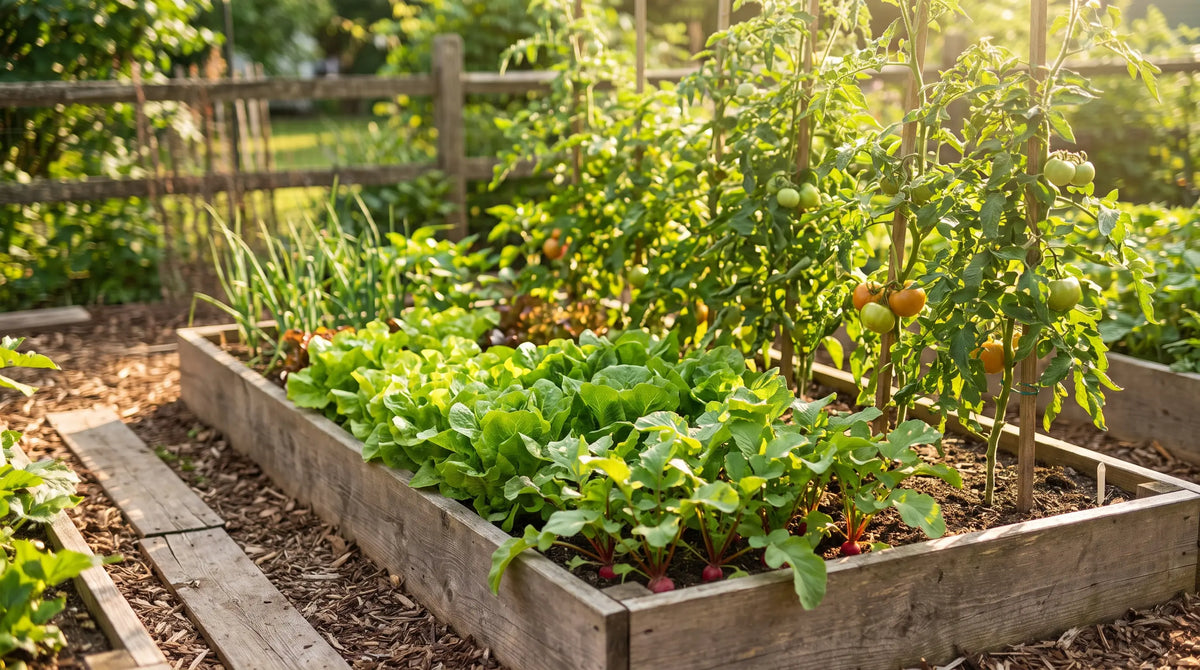
Vegetable Seeds to Grow at Home: 7 Easy Picks
Updated July 2026
A packet of vegetable seeds costs less than a single grocery run, and a handful of them will feed you for months. The trick is picking crops that forgive mistakes. Some vegetables need a long indoor start, bottom heat and careful hardening off. Others go straight into the ground, come up in a week, and give you something to eat before you have had time to worry about them.
This guide covers seven vegetables a first year gardener can grow from seed at home with ordinary soil, ordinary sun and no special equipment: radishes, leaf lettuce, spinach, tomatoes, peas, cucumbers and zucchini. For each one you get where to plant it, how to sow it, how much light it needs and when you will be picking, plus a link to the full growing guide. All of them are in the vegetable seeds collection.
What makes a vegetable easy to grow from seed
Easy has a specific meaning with seed, and it comes down to four traits.
It can be direct sown. Seed that goes straight into garden soil skips the indoor stage. No grow lights, no trays, no hardening off, no transplant shock. Six of the seven crops below handle it without complaint.
The seed is big enough to handle. Large seed is easier to space and to plant at the right depth. Pea, cucumber and zucchini seed can be placed one at a time with your fingers. Lettuce seed cannot, which is why it gets sown thickly and thinned later.
It is fast. A radish ready in a month tells you quickly whether your soil, water and light are working. A crop that takes five months hides its problems until it is too late to fix them.
It forgives you. Some vegetables sulk after one late watering or one cold night. The seven here shrug most of that off and keep growing.
The exception is the tomato, which does much better started indoors under a light. It earns its place anyway, because it is the crop most people actually want, and because a warm shelf and a cheap shop light are all it takes.
The seven at a glance
Use this to plan the bed before you order anything. Harvest windows assume decent soil and steady water.
| Vegetable | Best Location | Sowing Method | Light | Harvest Time | Difficulty |
|---|---|---|---|---|---|
| Radishes | Bed, raised bed or shallow pot | Direct sow | Full sun to part shade | 22 to 30 days | Very easy |
| Leaf lettuce | Bed, container, window box | Direct sow | Full sun, afternoon shade in heat | 30 to 45 days for baby leaves | Very easy |
| Spinach | Bed or container, cool season | Direct sow | Full sun to part shade | 35 to 45 days | Easy |
| Tomatoes | Sunny bed or 5 gallon pot | Start indoors, then transplant | Full sun, 6 to 8 hours | 60 to 85 days from transplant | Moderate |
| Peas | Bed or deep container with support | Direct sow | Full sun to part shade | 55 to 70 days | Easy |
| Cucumbers | Bed or large pot with a trellis | Direct sow in warm soil | Full sun | 50 to 65 days | Easy |
| Zucchini | Bed or very large pot | Direct sow in warm soil | Full sun | 45 to 60 days | Easy |
The 7 easiest vegetables to grow from seed
1. Radishes
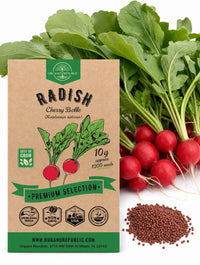
Nothing else in the garden goes from seed to plate this fast. Sow radish seed half an inch deep and an inch apart, directly in the bed, as soon as the soil can be worked in spring. Water it in and you will see green in four to seven days.
Two things decide whether you get a radish or just a leaf. The first is thinning: crowded seedlings make tops and no root, so pull every other one once the first true leaves show. The second is even water. Soil that dries hard, then gets soaked, produces split, woody roots.
Pull them young, because a radish left past its window turns pithy. Sow a short row every two weeks instead of one long row, and you will have them steadily from spring into early summer, then again through fall.
Full method: how to grow radishes. Browse radish seeds.
Sale

Cherry Belle Radish Seeds – Non-GMO HeirloomHeirloom, non-GMORound red radish, one of the fastest crops you can direct sow.
Price$4.99Starting at$3.99
2. Leaf lettuce
Leaf lettuce is the crop that convinces people they can garden. It germinates in cool soil, it germinates fast, and you never wait for a head to form. Cut the outer leaves and the plant carries on making more.
Sow shallow, no deeper than a quarter inch, because lettuce germinates better with light. Press it into moist soil rather than burying it. Thin to six inches for loose heads, or leave the stand thicker and cut the patch with scissors, cut-and-come-again style.
Heat is the enemy. Once days settle above the mid eighties, lettuce bolts: it throws up a flower stalk and the leaves turn bitter. Give it afternoon shade in summer, keep the soil damp, and sow again in late summer for a fall crop, which is usually the better one.
Full method: how to grow lettuce. Browse lettuce seeds.
Sale

Buttercrunch Lettuce Seeds – Non-GMO HeirloomTender butterhead that takes well to cut-and-come-again picking.
Price$4.99Starting at$3.99
3. Spinach
Spinach is a cold weather crop that most beginners plant too late. It germinates in soil as cool as 40 degrees and stalls out in heat, so the real windows are early spring and fall. A fall sowing under a light row cover often holds in the ground into winter.
Sow half an inch deep and an inch apart, then thin to three inches once the seedlings are up. Spinach is a leaf crop, so it wants nitrogen and steady moisture. Work compost into the bed before sowing and the leaves come thick and dark instead of thin and pale.
Harvest as you would lettuce, outer leaves first, or cut the whole plant an inch above the crown and let it push a second flush. When the center starts stretching upward it is about to bolt, so cut it all and use it.
Full method: how to grow spinach. Browse spinach seeds.
Sale

Bloomsdale Long Standing Spinach Seeds – Non-GMO HeirloomCrinkled dark leaves that hold in the bed through cool weather.
Price$4.99Starting at$3.99

4. Tomatoes
Tomatoes are the one crop here worth starting indoors. Sow a quarter inch deep in small pots six to eight weeks before your last frost date, keep them warm, and get them under a light the moment they sprout. A seedling on a windowsill alone stretches, leans and flops, and never catches up.
When the plants are stocky and nights stay above 50 degrees, harden them off over a week outdoors, then plant them out deep. Bury two thirds of the stem: tomatoes root along the buried section and end up sturdier. Put the stake or cage in on planting day, not a month later when the roots are in the way.
After that it is water and patience. Water deeply at the base rather than over the leaves, and keep it consistent, because swings between bone dry and soaked cause blossom end rot and split fruit. A slicing beefsteak wants full sun and real room.
Full method: how to grow tomatoes from seed. Browse tomato seeds.
Sale

Beefsteak Tomato Seeds – Red, Non-GMO HeirloomHeirloom, non-GMOBig slicing tomato for a sunny bed or a large container.
Price$4.99Starting at$3.99
5. Peas
Peas want cold. Sow them as early as you can work the soil, an inch deep and two inches apart, and let the weather do the work. They fix their own nitrogen, so they do not need rich ground, and they still produce in a bed that gets only part of the day in sun.
Give them something to climb even when the vines are described as short. Brushy sticks, pea netting or a section of wire fence is enough. Vines left to sprawl pick up mildew and hide their pods.
Then pick constantly. Snow peas come off flat, before the seeds swell. Snap peas want the pod filled but still crisp. A vine allowed to ripen a full pod decides its work is done and slows right down, so daily picking keeps it producing.
Full method: how to grow peas from seed. Browse pea seeds.
Sale

Oregon Sugar Pod II Snow Pea Seeds – Non-GMO HeirloomHeirloom, non-GMOFlat snow pod on short vines that only need a light trellis.
Price$5.99
Sale Price$4.99
6. Cucumbers
Cucumbers are big seeds, fast growers and heavy producers. The rule that matters is soil temperature. Wait until the ground is genuinely warm, around 70 degrees, because seed sown into cold soil rots instead of sprouting. That one mistake is behind most failed cucumber rows.
Sow about an inch deep, a few seeds per spot, and thin to the strongest plant. Run them up a trellis if you can. Vertical vines get better airflow, straighter fruit and a far easier harvest than a patch sprawling across the bed.
They drink. Uneven water turns a cucumber bitter and misshapen, so soak deeply two or three times a week rather than splashing daily, and mulch to hold it. Pick young and pick often, because one overripe cucumber left on the vine slows the whole plant down.
Full method: how to grow cucumbers from seed. Browse cucumber seeds.

Marketmore 76 Cucumber Seeds – Non-GMO HeirloomStraight slicing cucumber that climbs a trellis and keeps setting.
Price$4.99
7. Zucchini
Zucchini produces more than most households can eat, and it does it from seed sown straight into the ground. Two plants are plenty. Wait for warm soil, sow an inch deep, and give each plant three feet of space, because the leaves get large and crowded plants collect powdery mildew.
The confusing part is the flowers. The first blooms are male and drop off without setting fruit, which looks like failure and is not. Female flowers, the ones with a tiny fruit already formed behind the petals, come later. If you see few bees, move pollen between them with a soft brush in the morning.
Harvest at six to eight inches. A zucchini left to grow into a club is watery and seedy, and it tells the plant to stop making new ones. In peak season, look under the big leaves every day or two, because a fruit can go from finger sized to baseball bat in 48 hours.
Full method: how to grow zucchini from seed. Browse zucchini seeds.
Sale

Black Beauty Zucchini Seeds – Non-GMO HeirloomHeirloom, non-GMOThe classic dark green summer squash, heavy from one or two plants.
Price$4.99Starting at$3.99
How to choose vegetable seeds
Once you know what to grow, the packet is a short list of decisions.
- Match days to maturity to your season. Count forward from your last spring frost and backward from your first fall frost, and plant only what fits between them. A short season is the reason to pick a faster tomato over a long one.
- Choose heirloom and open-pollinated seed if you want to save your own. These varieties come back true from seed you collect, so a tomato you like this year is a free tomato next year. Every vegetable seed we sell is non-GMO, heirloom and open-pollinated.
- Buy fresh, tested seed. Seed loses vigor with age and bad storage, and a cheap packet that will not come up is not cheap. Every lot is germination tested in our US warehouse before packing, and we ship as a US-based licensed seed dealer.
- Read the variety, not just the crop. Bush cucumbers behave nothing like vining ones. Loose leaf lettuce is far easier than a crisphead. The variety name on the packet is doing real work.
Every packet carries a QR code on the back that opens a free growing guide for that variety, so depth, spacing and harvest timing are with you at the bed. Shipping is free on orders over 49 dollars. For greens on a kitchen counter while the garden is still frozen, microgreens and sprouting seeds are a good winter stopgap.
The supplies you actually need
You do not need much, and most of what gets sold to beginners is optional. The real list: a bed or a few containers with drainage, a bag of compost, a trowel, a watering can with a fine rose, and something to label rows with. The fine rose matters more than it sounds, because a hard stream washes small seed out of the row.
For containers, depth is the whole game. Radishes, lettuce and spinach are content in six to eight inches of potting mix. Peas want ten to twelve. Cucumbers, zucchini and tomatoes need a five gallon container at a minimum. Use potting mix, not garden soil, which compacts into a brick in a pot.
The only crop here that needs equipment is the tomato: a tray, small pots, seed starting mix, and a cheap shop light hung a couple of inches above the seedlings for about 14 hours a day.
Common mistakes to avoid
- Planting too deep. The rule of thumb is two to three times the width of the seed. Lettuce barely gets covered. A pea goes in a full inch. Small seed buried deep never reaches daylight.
- Letting the seedbed dry out. Seed that takes up water and then dries out dies. Between sowing and sprouting the top inch of soil has to stay damp, which in warm weather means a light watering most days.
- Skipping the thinning. It feels wasteful, and it is the top reason for a lush row of radish leaves with nothing underneath.
- Sowing warm season crops into cold soil. Cucumbers, zucchini and tomatoes want soil in the 70s. Radishes, lettuce, spinach and peas want it cool. Planting them all on the same May weekend is why half a garden fails.
- Watering little and often. Shallow water grows shallow roots that cook in the first hot week. Established plants want a deep soak two or three times a week.
- Sowing the whole packet in one day. Sow radishes, lettuce and spinach in short rows every couple of weeks, and the harvest arrives in amounts you can actually use.

Start with three, not seven
Pick three crops off this list for your first season rather than all seven. Radishes for speed, leaf lettuce for a steady supply of salad, and one summer crop you genuinely want to eat, usually a tomato or a cucumber. Learn how your soil holds water and where the sun falls, then add the rest next year.
A garden small enough to keep up with beats an ambitious one that gets away from you in July. Keep notes on what you sowed and when, and season two gets much easier. Everything above is in the vegetable seeds collection.
Frequently asked questions
What are the easiest vegetables to grow from seed?
Radishes, leaf lettuce and spinach are the easiest. They go straight into the ground, sprout within a week and are ready to eat in about a month, with no equipment at all. Peas, cucumbers and zucchini are close behind. Tomatoes take more setup, but they reward it.
What vegetable should a beginner grow first?
Radishes. They are sown directly into the soil, they come up in under a week, and they are ready to pull in three to four weeks. That short cycle teaches you how your soil, light and watering behave before you commit a whole season to a slower crop.
Should I direct sow or start seeds indoors?
Direct sow radishes, lettuce, spinach, peas, cucumbers and zucchini, since they resent being moved. Start tomatoes indoors six to eight weeks before your last frost, because they need a long warm season and cannot go out until nights stay mild.
When should I plant vegetable seeds?
Sow the cool season crops, radishes, lettuce, spinach and peas, as soon as the soil can be worked in spring, then again in late summer for a fall harvest. Wait for warm soil near 70 degrees before sowing cucumbers or zucchini, or setting out tomato plants.
Can I grow vegetables from seed in containers?
Yes, but match the pot to the crop. Radishes, lettuce and spinach need six to eight inches of depth. Peas want about a foot. Tomatoes, cucumbers and zucchini need at least a five gallon pot. Use potting mix and check that drainage holes are open.
How long do vegetable seeds take to germinate?
In moist soil at the right temperature, most of these sprout in three to ten days. Radishes and lettuce are the quickest, often in under five. Spinach and peas take longer when the soil is cold. Cucumber and zucchini seed will simply rot in cold ground.
How often should I water a new vegetable bed?
Until the seed sprouts, keep the top inch of soil damp, which can mean a light watering every day in warm weather. Once the plants are established, switch to a deep, slow soak two or three times a week instead, so that the roots grow downward rather than sideways.
How much sun do vegetables need?
Fruiting crops such as tomatoes, cucumbers and zucchini want six to eight hours of direct sun. Leafy crops and roots, meaning lettuce, spinach and radishes, produce well on four to five hours and appreciate afternoon shade once summer heat arrives.
Why did my vegetable seeds fail to sprout?
Four causes cover almost every case: the seed went in too deep, the bed dried out after sowing, the soil was still too cold for that particular crop, or a heavy watering washed the seed out of the row. Old seed stored in a hot garage or shed is the fifth.
Where can I buy non-GMO vegetable seeds?
Organo Republic sells non-GMO, heirloom, open-pollinated vegetable seeds as a US-based licensed seed dealer. Every lot is germination tested in our US warehouse before packing, shipping is free on orders over 49 dollars, and each packet carries a QR code.

- Choosing a selection results in a full page refresh.









 Easy Returns 30-day guarantee